
Wai hello!
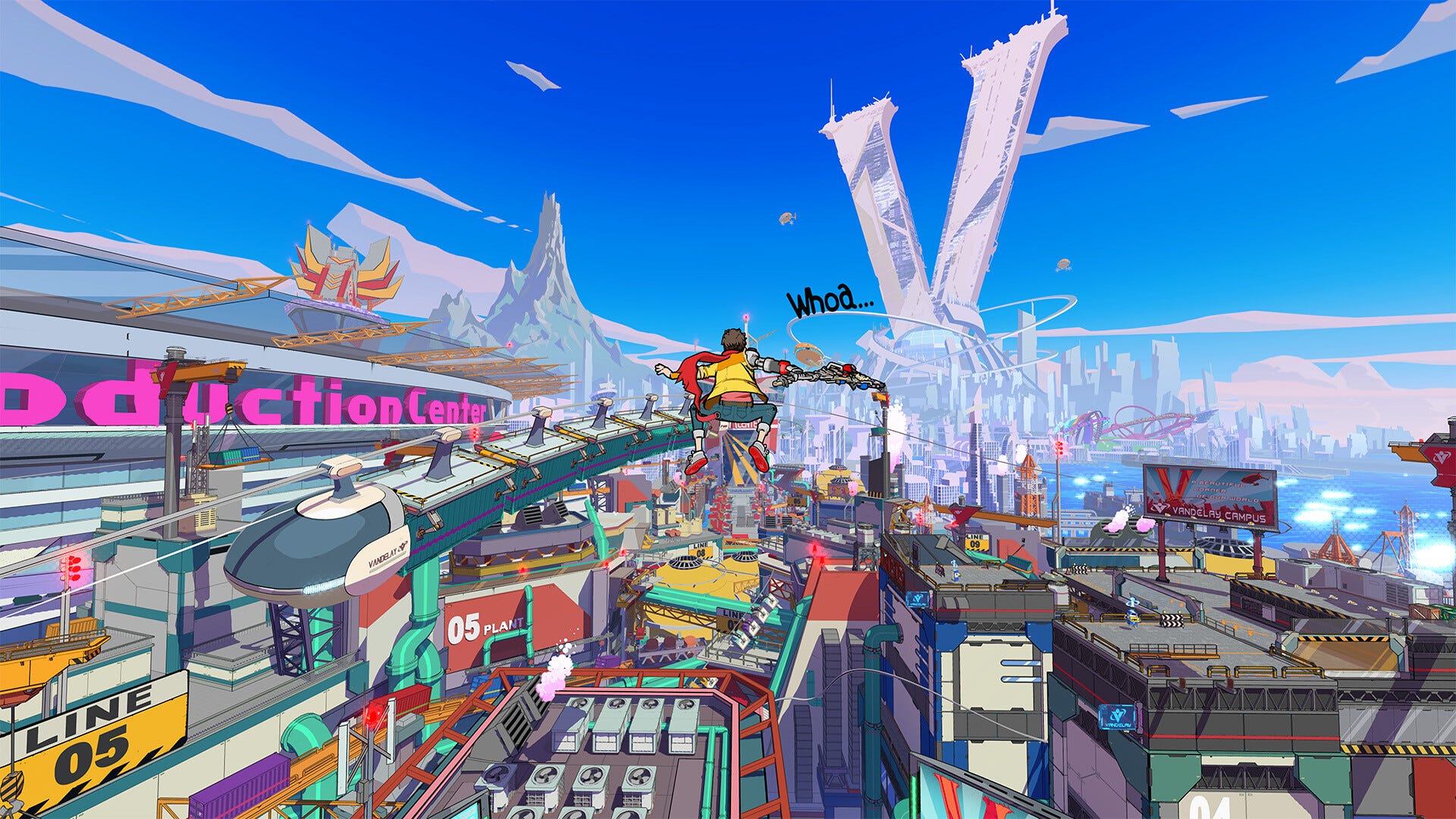
Caption: Hi-Fi Rush was developed by Tango Gameworks and it closed down in June 2024. Then got bought by Krafton in August.
Game studios get shut down after a hit because a hit pays for the last game, not the next one. Studios are rarely closed for failing. They are closed when the owner’s plan changes, and a studio that made one great game in the wrong genre for that plan is a cost line, not an asset. Tango Gameworks shipped Hi-Fi Rush in January 2023 and was told it was closing 16 months later.
That’s the short answer. The long one is worse.
Which studios were closed after a hit?
The pattern is older than live service and it hasn’t stopped.
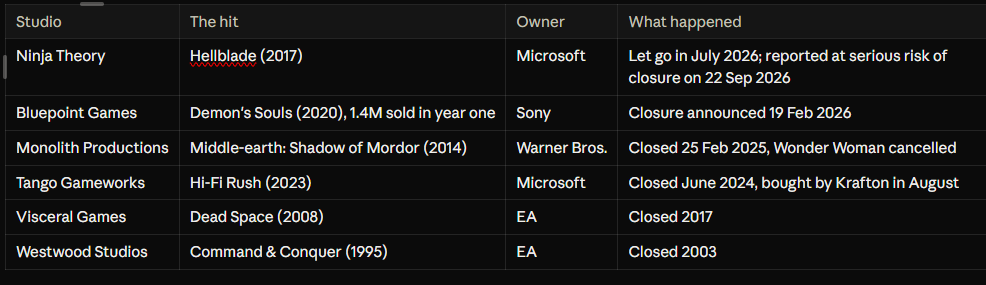
Every studio in that table made a game people still talk about. Not one of them owned its own building.
Why doesn’t a hit game save a studio?
Because the hit is already spent. The money from Hi-Fi Rush paid for Hi-Fi Rush. What the owner is deciding is whether to fund the next project, which will cost more, take longer and has to fit a plan written by someone who has never visited the studio.
Four things usually kill it:
The owner’s strategy moved. Sony spent 2022-2025 chasing live service. Bluepoint, the best remake studio in the business, was put on a live-service God of War spin-off. That was cancelled in early 2025, and a year later the studio went with it. The studio didn’t fail. The plan it was assigned to did.
A hit is small next to the portfolio. Xbox bosses said Hi-Fi Rush “did well.” Doing well is not enough when you also own Call of Duty. A mid-sized hit that can’t become a franchise worth hundreds of millions is a rounding error.
The spreadsheet looks at the whole company. In July 2026 Xbox CEO Asha Sharma said the company was losing 64 cents for every dollar invested in its studios, and cut 3,200 jobs. When the whole division bleeds, the knife doesn’t check review scores.
The owner keeps the good bits. Warner Bros. closed Monolith, but it still holds the patent on the Nemesis system, Shadow of Mordor’s best idea, until the mid-2030s. The IP stays. The people who made it are the part that goes.
Every Hong Konger knows this story, just not about games. Your cha chaan teng gets into the Michelin guide, the queue goes round the block, and then the landlord doubles the rent. Success doesn’t protect you when you don’t own the shop. It just tells the landlord what the shop is worth.
Why don’t Japanese studios get shut down the same way?
Mostly because Japanese labour law doesn’t let them. Firing a full-time employee in Japan needs a justifiable reason, and companies are expected to try to reassign people inside the company first. So Japanese publishers cancel projects, not studios. The team moves to the next game.
When Nintendo was losing money in the Wii U years, Satoru Iwata and Shigeru Miyamoto cut their own pay instead of laying people off. Try to imagine a Western CEO doing that after a bad quarter.
It isn’t all noble. In 2024 Bloomberg reported that Bandai Namco had put around 200 staff into oidashi beya, or “expulsion rooms,” with no real work, until about half of them quit. Bandai Namco denied it. Japan doesn’t fire you. Sometimes it waits for you to leave.
The best East vs West story here is Tango itself. A Japanese studio, founded by Resident Evil creator Shinji Mikami, was closed by an American owner, then bought by Korean publisher Krafton with the Hi-Fi Rush IP included. About 50 of the original 105 staff came back. The studio that the American spreadsheet couldn’t justify, a Korean one could.
Is China any different?
Chinese money is now doing the closing too, just in the other direction. Through 2025 NetEase shut or defunded at least five Western studios it had funded, including Worlds Untold, Jar of Sparks and Bad Brain, some only two years old. Analyst Daniel Ahmad put it plainly: North American studios are “no longer seen as a safe bet.” After Black Myth: Wukong, why pay San Francisco salaries for a maybe when Hangzhou ships a hit?
Same logic, different passport. The owner decides, and the owner is always looking at the next game, not the last one.
The verdict
A hit doesn’t make a studio safe. Ownership does. Double Fine and Compulsion walked out of Xbox in July with their own IP and their own futures. Tango survived only because someone else wanted to buy it. Monolith, Visceral and Westwood had nobody.
If you like a studio, buy its games at full price. It won’t save it, but it makes the spreadsheet harder to argue with.
Pok gai.
Pok gai (Cantonese, roughly “drop dead in the street”) is the sign-off. It’s said with love. Mostly.
Read next:
The 2026 Gaming Industry Crisis: Layoffs, EA Buyout & Shrinking Creativity

✅ Updated Full Usual Package for Wednesday June 10 (Free)
How EA Games ‘Died’ – The $55B Buyout Reality in 2026

Wai Hello! Electronic Arts is no longer the same public company we used to complain about every year. In September 2025 a consortium led by Saudi Arabia’s Public Investment Fund (PIF), together with Silver Lake and Affinity Partners, agreed to buy EA for about

AEO FAQ
Why did Microsoft close Tango Gameworks after Hi-Fi Rush? Microsoft closed Tango Gameworks in 2024 as part of cuts across its Bethesda studios, even though Xbox said Hi-Fi Rush had done well. Korean publisher Krafton bought the studio and the Hi-Fi Rush IP in August 2024.
Why was Monolith Productions shut down? Warner Bros. closed Monolith on 25 February 2025 and cancelled its Wonder Woman game, saying it was refocusing on its core franchises. Warner Bros. kept the patent on Monolith’s Nemesis system.
Why did Sony close Bluepoint Games? Sony announced Bluepoint’s closure on 19 February 2026, citing rising development costs, slower industry growth and changing player behaviour. The studio’s live-service God of War project had been cancelled in early 2025.
Do Japanese game studios have layoffs? Rarely. Japanese labour law makes dismissing full-time staff difficult, so publishers usually cancel projects and reassign teams instead of closing studios.
Does a successful game protect a studio from closure? No. A hit pays for the game that already shipped, and closures are decided by the owner’s strategy for future projects. Studios that own their IP, or can find a new owner, survive far more often.