
Why Gaming Benchmarks Lie — And You Keep Believing Them
Let’s clear something up before people get emotional:
Benchmarks are not gameplay.
They never were.
But PC gamers treat them like holy scripture.
If the chart looks good, suddenly the game is “fine.”
If the number is high, your complaints are invalid.
That’s not analysis.
That’s Pok Gai math.
Average FPS Is the Greatest Scam in PC Gaming
Average FPS is the laziest metric ever invented.
You can have:
140 FPS average
random drops to 40
microstutter every 10 seconds
And the benchmark will still smile at you and say:
“Looks great!”
Your eyes don’t experience averages.
They experience the worst moments.
One hitch breaks immersion.
One spike ruins aim.
But charts don’t feel pain — humans do.
Benchmarks Are Run in Fake Conditions
Here’s what benchmark videos don’t show you:
They’re run:
after shaders are cached
after multiple restarts
after settings are dialed in
in isolated scenes
with zero background chaos
That’s not real gameplay.
That’s a performance photoshoot.
Of course it looks smooth.
It’s staged.
Then you boot the game fresh and it stutters like a dying engine.
But hey — the chart was green, right?
1% Lows Became a Checkbox, Not a Warning
People love flexing:
“Bro the 1% lows are fine.”
Cool.
Did you actually feel them?
Most reviews mention 1% lows for two seconds, then move on.
No context. No explanation. No gameplay correlation.
If your 1% lows drop hard, that’s:
stutter
hitching
inconsistency
But instead of saying “this feels bad,” the industry goes:
“Still playable.”
Playable is not good.
Playable is cope.
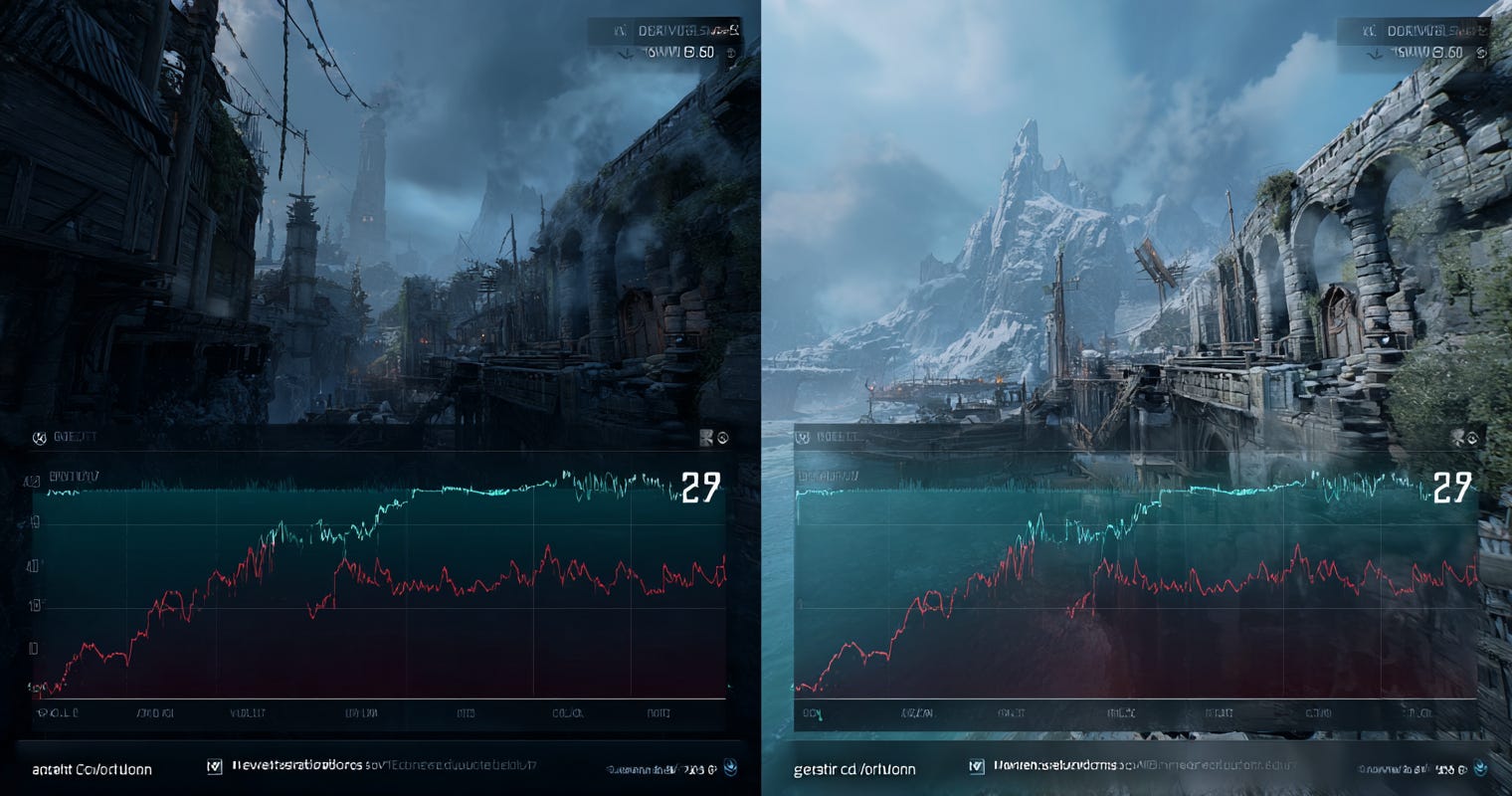
Frame Time Graphs Get Ignored Because They’re Ugly
Frame time graphs are honest.
They show:
spikes
instability
pacing issues
That’s why nobody likes them.
They don’t fit thumbnails.
They don’t look sexy.
They don’t help sell GPUs.
So people ignore them and stare at FPS bars like monkeys looking at bananas.
Big bar good.
Small bar bad.
Zero thought required.
“But My Benchmark Looks Fine” Is Not an Argument
This is peak PokGai behavior.
Someone says:
“This game stutters.”
And the response is:
“My benchmark is smooth.”
Okay… and?
Your benchmark doesn’t:
load new areas
trigger shaders
stream assets
handle chaos
Benchmarks test best-case scenarios.
Real gameplay is worst-case stress.
Comparing the two is like saying:
“My car runs fine on a dyno, so potholes don’t exist.”
YouTubers Love Benchmarks Because They’re Safe
Benchmarks are convenient.
They:
avoid subjective discussion
avoid calling games unfinished
avoid pissing off publishers
It’s easier to say:
“Performance is good on my system.”
Than to say:
“This game feels like ass.”
Feel is risky.
Charts are safe.
So you get a whole industry talking around the problem instead of calling it out.
Consoles Expose Benchmark Nonsense Instantly
Console reviews don’t hide behind charts.
They say:
stable or unstable
smooth or stuttery
consistent or messy
Because console players don’t care about numbers — they care about feel.
PC gaming could learn something here.
But instead, we worship charts and ignore experience.
PokGai Reality Check (No Mercy)
Benchmarks didn’t ruin PC gaming.
Blind faith in benchmarks did.
FPS averages hide:
stutter
bad pacing
shader compilation
unfinished engines
If your defense of a bad experience is:
“The benchmark says it’s fine”
You’re not analyzing performance.
You’re defending a spreadsheet.
Certified.
Chart-brained.
Pok Gai behavior.
❓ FAQ
Q: Why don’t benchmarks match real gameplay?
Because benchmarks run in ideal conditions and ignore stutter, spikes, and chaos.
Q: Is average FPS useless?
On its own, yes. It hides the worst moments that actually affect feel.
Q: What matters more than FPS?
Frame pacing, frame times, and consistency.
Q: Are benchmarks still useful at all?
Yes — for rough comparisons, not for judging experience.
Q: Why do reviewers rely on benchmarks so much?
They’re safe, repeatable, and avoid subjective criticism.
Q: How should gamers judge performance instead?
By playing, watching frame-time graphs, and noticing stutter — not just numbers.