
Introduction: Assassin’s Greed, Lah?
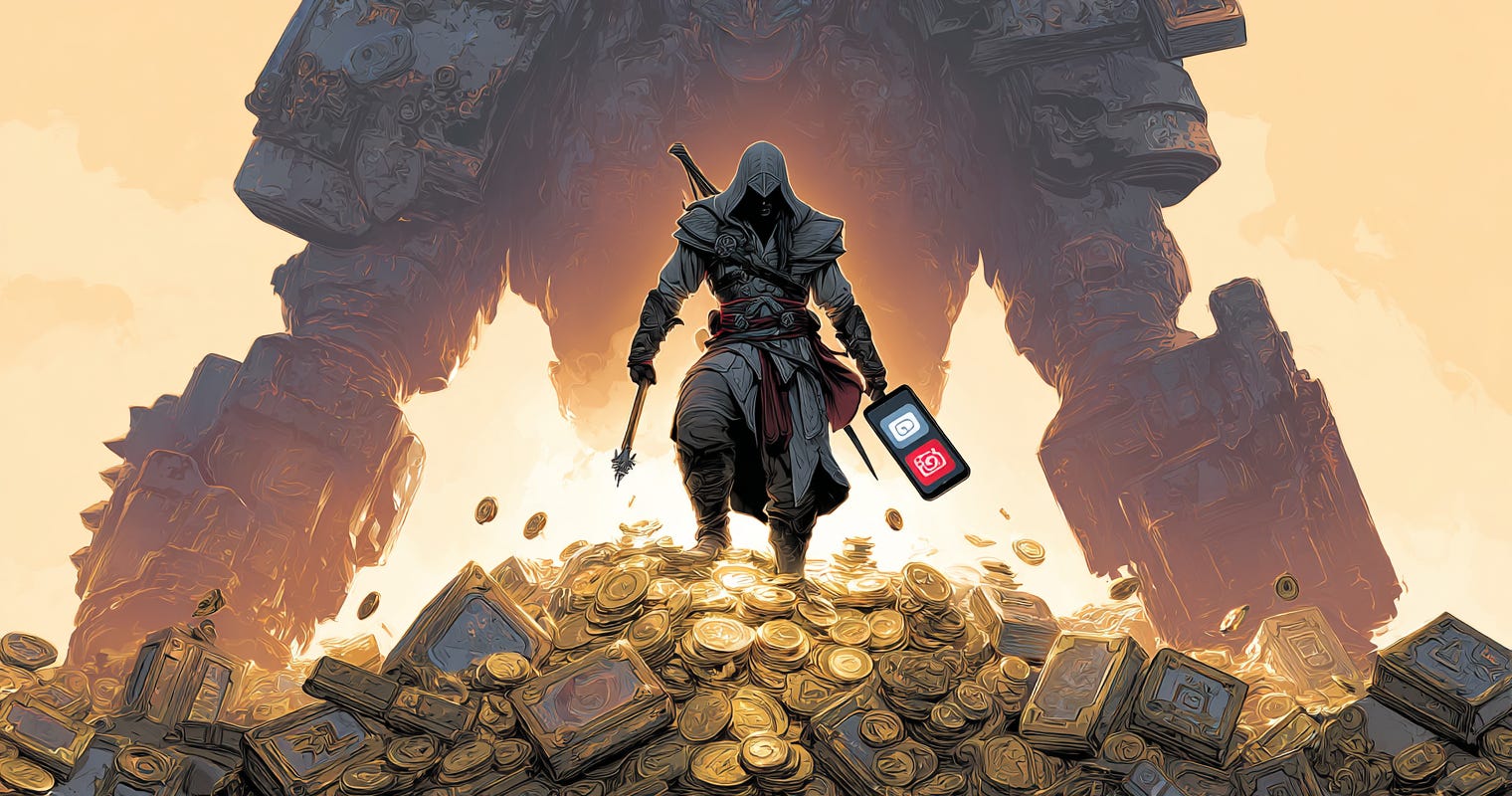
Remember when Assassin’s Creed was all about sneaky parkour, epic historical drama, and stabbing evil Templars? Good times. Nowadays it feels like Ubisoft’s new target is our wallets, lah – Assassin’s Greed more like. Enter Tencent, the Chinese gaming giant that just plonked €1.16 billion (like HK$10 billion, omg) into a new Ubisoft sub-company (nicknamed Vantage) housing AC, Far Cry and Rainbow Six. Officially Ubisoft still “controls” the franchise - reuters.com, but come on – when your sugar daddy holds a quarter of your shinobi business, you best believe they’ll shout directions behind closed doors. Fans are nervous, thinking “Pok gai lah, Assassin’s Creed is becoming Assassin’s Cash Cow!” 😒
Tencent’s Investment: A New ‘Creed’ is Born
So, Tencent didn’t drop €1.16B for charity, hor. That cash bought them roughly a 25–26% stake in the new Assassin’s Creed/Far Cry/R6 subsidiary - reuters.com. Ubisoft says “we still run the show”- reuters.com, but let’s be real – this is like a cha chaan teng owner telling the bank “trust me lah, I still boil the milk tea.” Ubisoft had a rotten 2024 (flop games, layoffs, XDefiant canned, total gong-show) and apparently almost offered up the whole company to Tencent to stay afloat - gameinformer.com. In the end Ubisoft carved off its “crown jewels” into Vantage and let Tencent buy a big slice. Essentially they told Tencent: “Help save us with money, we’ll do anything… even make AC mobile gacha if you want!”
The official spiel is grand: the Tencent-backed Vantage “will focus on building game ecosystems to become truly evergreen and multi-platform” - gameinformer.com. Translation? Annual releases, constant DLC, mobile spin-offs, cross-play, and loads of live-service garbage. Ubisoft even bluntly said they’ll “expand multiplayer… introduce free-to-play touchpoints, and integrate more social features” - gameinformer.com. In other words: expect yearly Assassin’s Creed games and a bunch of Fortnite-style updates, with everything designed to keep you grinding (and spending) forever. They want each big franchise (AC, R6, Far Cry) to hit €1 billion per year - tweaktown.com – yes, billion with a B. If that’s not a license to milk the cow until it drops dead (畜牲都唔畀睇), I don’t know what is. 🐄💸
Ubisoft co-founder Guillemot says this move is to “crystalize the value” of these franchises and fuel long-term growth - gameinformer.com, and Tencent’s Martin Lau praises Ubisoft’s “creative vision” - gameinformer.com. But Lau also says he sees “immense potential for these franchises to evolve into long-term evergreen platforms” - gameinformer.com – aka games that never die and never stop charging you. In the end, don’t let the fancy talk fool you: this deal was a desperate Hail Mary for Ubisoft, and Tencent definitely has motives (and watchful eyes) to reshape AC into a global, multi-platform cash engine.
Mobile Creed: China Gets Its Assassins
Irony of ironies: fans who begged for an AC game in ancient China finally get one… but it’s a mobile game called Assassin’s Creed Codename Jade. Instead of a blockbuster console title, Jade is an open-world RPG on your phone, built by Tencent’s own studios and published by their Level Infinite label - videogameschronicle.com. It’s 3rd-century BCE China on a touchscreen – parkouring with your thumb, meh. Jade had a flashy cinematic reveal at Gamescom 2023 (enough to make Hong Kong gamers drool) but then poof – the game vanished. Reports say Tencent quietly delayed Jade to 2025 - videogameschronicle.com after yanking hundreds of devs onto other projects, probably because making a AAA game in China costs serious money.
So while Chinese players wait for Jade to drop (maybe next year?), the rest of us wonder if Jade is becoming Assassin’s Creed Half-Life 3 (never coming out). One thing’s clear: Tencent loves the Chinese market – it’s the world’s biggest gaming audience (even bigger than the US) – and now AC is finally heading East, lah. Expect Assassin’s Creed events and content targeting China first. Maybe Chinese players will get VIP access or collabs with Chinese history icons months before we do. Ubisoft will probably bend over backwards to please Beijing’s censors. Remember when Rainbow Six Siege had to lose all its blood, skull icons and even remove drug references just to launch in China, which infuriated Western fans? (Yup - pcgamer.com, Ubisoft seriously did that.) Now imagine Assassin’s Creed content tailored to Chinese regulations. Maybe Assassin’s Creed Red (Feudal Japan) will have no decapitations or even rename “Assassins” to “Peaceful Helpers” in the China release – who knows! The creative trade-offs of chasing Chinese yuan are real. Western fans can fume online (or try to learn Mandarin, lol).
On the (semi-)bright side, this means more AC content than ever – for better or worse. Ubisoft announced like a dozen Assassin’s Creed projects: Mirage (recently out), Red (Japan), Hexe (witches in Germany), Invictus (multiplayer), Infinity (the new live-service hub), Jade (mobile China), etc. It’s bonkers. AC is going to be everywhere – your PC, console, phone, maybe even on your smart fridge displaying ads. The franchise isn’t just one game every few years; it’s becoming a relentless multi-headed hydra of assassinations. If you still enjoy stabbing Templars from the good ol’ single-player days, you might soon be sick of it. As a Hong Kong-Canadian gamer who grew up doing Altaïr’s first leap of faith, I’m torn – excited to finally run around ancient China and Japan, but mortified it’ll taste like cheap instant wonton noodles rather than the real deal. 😩
Who Holds the Hidden Blade: Creative Control Concerns
Whenever Tencent muses about a game, fans freak out, “Will the soul of the series be sold to commerce?” Officially, Ubisoft insists creative and managerial control remains their sword – at least for now - reuters.com. Legally, Ubisoft has clauses to keep control for a couple years - reuters.com, and Tencent pledged not to micromanage (quietly) to avoid scaring everyone. But money talks loudest, lah. Tencent didn’t drop €1.16B just to sip tea quietly; they have agendas (new markets, new profits). If Ubisoft’s next AC pitch isn’t gold for Tencent’s goals, expect strong “suggestions” in backrooms.
Case in point: Ubisoft reorganized into “Creative Houses” (shiny name) – one for each big franchise – and the Assassin’s Creed/Far Cry/R6 house is co-led by Tencent via Vantage Studios. In practice that means the dev teams from Montreal, Quebec, etc. are now under a giant umbrella that reports to a board with Tencent reps. The era of lone creative geniuses is basically over; now every big idea has to clear the bean counters. Want to make a risky, artistic AC with weird gameplay? Fat chance if the viewgraphs predict low engagement. It’s more like: “Here’s your design doc – just add gacha mechanics, kapeesh?” If you hated Ubisoft’s recent formulaic open-world grindfests (towers, fetch quests, random AI-animal-thingies) and half-baked live titles (cough XDefiant cough), this doesn’t bode well. Fans worry Tencent will push Ubisoft to copy the success formulas from its other studios – safer, massively monetizable designs. Remember Riot Games? Tencent let Riot mostly do its LoL thing, but when Riot refused to make a mobile League, Tencent simply cloned LoL into Arena of Valor and raked in cash - pcgamer.com. If Ubi balks, they could try something similar.
To be fair, Ubisoft wasn’t pure creativity heaven either. They churned out annual ACs until burnout, chased every trend (open worlds, RPG loot, NFTs like Ubi Quartz – ugh) and got pretty formulaic. Some optimists say Tencent’s cash might help refocus or polish games. Tencent bragged about Ubisoft’s “creative vision” and says they want “long-term evergreen platforms” - gameinformer.com. Maybe with Tencent’s big pockets we’ll see better post-launch content or snappier updates. But in reality, global publishing giants usually just tune games for maximum recurring revenue. The likely reality: Ubisoft’s core AC games might not suddenly feel different story-wise, but they’ll layer on every possible monetization and mass-market safety filter. Imagine Assassin’s Creed with daily quests, XP/loot packs for sale, time-gated events, and “in-game currency” streams galore. If collecting feathers in AC2 annoyed you, imagine way more random crap to collect – unless you pay. And if any edgy theme or political risk could “upset Chinese regulators” or alienate 5-year-olds, guess what might vanish? Creative freedom at Ubisoft was already on life support, and Tencent could either prolong it or plug it into their live-service dialysis machine.
Monetization Overdrive: Gachafication of AC
Let’s address the big elephant in the gameroom (or should I say, the whale in the loot box): Tencent lives for monetization. These guys are the kings of squeezing wallets. Case study: Honor of Kings, Tencent’s mega-mobile MOBA, once dropped a single character skin for $22 million in one day - xenoss.io (holy moly, more than what most of us earn in a decade!). How? Flashy limited-time gacha sales during events – hype and FOMO to the max. Tencent’s games are psychological money traps: loot boxes, shiny skins, VIP passes, you name it. So of course they see Assassin’s Creed and think: “We should do that.”
Ubisoft already dipped toes in muddy monetization (XP boosters in Odyssey, rainbow gear packs in Valhalla, etc.). Under Tencent’s wing, get ready for it to double or triple. I’m picturing Assassin’s Creed Infinity (the new live-service hub) becoming essentially a launchpad for season passes and daily login goodies. Imagine “pulling” for legendary assassins like they’re Genshin characters 🎰 — Ezio Auditore banner with a 0.5% chance unless you gamble for pity pulls. Outfits, weapons, even cool animations hidden behind RNG draws. 😱 And Jade, being a free-to-play mobile RPG, will be the testing ground: they’ve confirmed fully customizable characters, meaning dozens of expensive cosmetics to buy. Every AC game will probably have multiple in-game currencies, battle passes, and “special editions” stuffed with paid boosts. Ubisoft execs have already been drooling over Genshin Impact’s loot-powered success – don’t be shocked if Ubisoft’s moodboard now reads “Assassin’s Creed, but make it a gacha.”
And sure, games need money to survive. A few fair optional skins or boosts I can stomach, but the fear is AC will prioritize squeezing every cent over crafting a compelling adventure. Valhalla already had repetitive long raids and a store selling time-savers. Under Tencent’s guidance, expect the franchise to morph into something like Fortnite or GTA Online: free-ish base game, then endless prompts for your credit card. Maybe we’ll even see an Assassin’s Creed mobile battle royale – Tencent loves those (they co-made PUBG Mobile and Call of Duty Mobile). Hell, Tencent owns 40% of Epic, so Ezio’s already moonwalking in Fortnite – why not strap sneakers on Altaïr? Bottom line: AC is no longer just a game, it’s a 24/7 business platform. They’ll milk it like a Marvel movie universe: TV shows, merch, events, crossovers… every thread of the creed turned into a product.
Sarcasm alert: Ubisoft proudly calls this “evergreen” content - gameinformer.com, as if we wanted AC to become one of those games you check every day for a login reward. If AC does go full TSR (Total Service Regime), maybe we’ll get Assassin’s Creed: GO (AR parkour in your flat, collect Templar egg shells) or even Assassin’s Creed – Dating Sim (bang your way through history, swipe right on Julius Caesar – just kidding… sort of). 😬 It sounds absurd, but with Tencent in charge, almost no idea is too crazy cash-grabby. These guys have 14 games that each made over $1 billion - xenoss.io, so they’re likely scribbling “AC Gacha Monetization” ideas on their office whiteboard. The Assassin’s Creed we knew – one game, one purchase, one story – is probably about to be assassinated. In its place stands Assassin’s Creed: Endless Grind & Pay. Prepare for “Assassin’s Creed: Get Forever”-style updates that never stop until you can’t climb rooftops or buy feathers without hitting a paywall.
The Tencent Gaming Empire: Resistance is Futile?
To put Tencent’s AC takeover in perspective, gaming is basically their empire now. They own or control a chunk of just about everything. Riot Games? 100% owned (LoL, Valorant) - pcgamer.com. Epic Games? ~40% (Fortnite, Unreal Engine) - pcgamer.com. Supercell? ~84% (Clash of Clans). PUBG Mobile? Tencent co-developed it and Krafton (PUBG maker) is partially owned by Tencent (~13.5%). Activision Blizzard? They own about 5% and also publish Blizzard titles in Chinapcgamer.com. Paradox Interactive (Crusader Kings) ~10% - pcgamer.com. Frontier Dev (Elite Dangerous) ~9% - pcgamer.com. Leyou (Warframe studio) 100%. And dozens more (Funcom, Kakao, Bluehole, etc.). It’s gotten so big that gamers joke Tencent is like Thanos collecting Infinity Stones – and now Assassin’s Creed is the Time Stone (or something) in their gauntlet. 🎮🦾
This mega-empire freaks people out. Sure, it’s corporate greed, not a human villain, but some players worry about geopolitics too. A Chinese conglomerate having so much say in global entertainment raises flags: data privacy, politics, censorship. Will future AC games shy away from “sensitive” plots or gore just to keep Beijing happy? No one likes that feeling of the Emperor looking over your shoulder. Remember when Ubisoft apologized for removing Rainbow Six’s blood? (全世界都睇到咁㗎!) Players got angry that our games are bending to Chinese rules - pcgamer.com. In a worst-case (maybe conspiratorial) scenario, could Ubisoft start editing AC lore? (“Um, that part about corrupt emperors? Not suitable in some markets.”) Hard to prove, but it’s in the back of many fans’ minds.
That said, let’s not demonize Tencent entirely. They’re doing what any mega-corporation would: expanding their turf. Often they let studios run themselves if revenues flow (Riot and Supercell still mostly do their own thing). Tencent cares about ROI above all. If Ubisoft keeps pumping out cash cows, maybe Tencent won’t squeal. In fact, Tencent has enormous resources that could help Ubisoft – cash to polish games more, or tech for better online features (Tencent’s got top-tier mobile and server expertise). Maybe we’ll see higher budgets or crazy collabs thanks to their war chest. Tencent even talks about empowering “creative independence” (though cynics roll eyes). At the end of the day, though, if Assassin’s Creed still makes truckloads of money under the new system, Tencent will probably stay hands-off on day-to-day game design. If sales drop or players revolt (or regulators clamp down), they’ll be right there with sharp pencils balancing the budget for plan B.
But let’s be real: when we next boot up an AC game and find ourselves staring at three different in-game currencies, a weekly login reward screen, and a $99 “Animus VIP Battle Pass” offer, we’ll know who to blame. 😜 The assassins may be masters of stealth, but now they’re basically working for the Emperor. The only creed going forward might as well be: “Nothing is true; everything is monetizable.” 🤷♂️💰
Conclusion: Adapt or Assassinate (or Walk Away)
So, what can a die-hard Assassin’s Creed fan do in this Tencent-patriated future? A few paths: Adapt, Speak Up, or Walk Away.
Adapt: Embrace the chaos. Maybe you genuinely enjoy live-service games or mobile spin-offs. New players who never knew Ezio or Altair might love daily quests and co-op modes. Learn to parkour on your phone, collect Helix points with friends, and maybe you’ll have fun. Think of it like moving from eating hand-made dim sum to instant noodles: not the same experience, but you get some sustenance.
Speak Up: Vent on forums and social media! Ubisox and Tencent might listen if enough fans howl. Gamers have made them back off before (remember when always-online PC games or NFTs got shelved after backlash?). Keep the pressure. Call out sketchy microtransactions when they appear (see how refunds got triggered for XDefiant players - videogameschronicle.com). Vote with your wallet by not buying blatant paywalls. If a monetization scheme makes the player count drop, the suits will notice. Just remember to keep it respectful-ish (no threats) — but a little public dissent can make companies twitch.
Walk Away: The sad, final option. If Assassin’s Creed really turns into a skin-selling grindfest that feels like a second job, maybe it’s time to quit. Ubisoft risks milking the franchise to death (a true betrayal if the franchise we grew up with ends up worse than a clickbait mobile game). Some fans may simply give up and wait for the next Horizon or God of War. Personally, I’ll stick around a bit longer – there’s still joy in the core idea of AC. I’m curious about feudal Japan in Red, and ancient China in Jade even if it’s on my phone. But if any AC turns into a joyless money pit, I’m out faster than you can say “Helix Credits”.
In the end, maybe this is just where gaming is heading: everything live, everything service. We can gripe (I sure have 😜) but we might also need to adjust expectations. Or maybe Ubisoft will surprise us and use all that Tencent cash to polish AC into something great (and hey, maybe pigs will fly, lah). For now, strap in: the Assassin’s Creed you knew is mutating. One thing’s for sure – the next time someone asks, “Who watches the Watchmen?”, our answer will be, “Eh, probably some Tencent execs.” Requiescat in pace, creative integrity – we barely knew ye. 😅
FAQ
Q: How much of Ubisoft (and Assassin’s Creed) does Tencent own now?
A: Tencent directly owns about 11% of Ubisoft’s shares (as of 2022) - pcgamer.com – that’s a significant chunk of the parent company. On top of that, Tencent put €1.16B into Vantage (the new Ubisoft subsidiary for AC, Far Cry and R6), which gave them roughly a 26% economic stake in that unit - reuters.com. Importantly, Ubisoft still holds overall control of Vantage - reuters.com, and Tencent’s stake is minority. So Tencent doesn’t “own” Assassin’s Creed outright, but they do have big financial interest in the franchise. In short: Tencent is a major investor in Ubisoft’s biggest IPs but not the majority owner.Q: Is Tencent now in charge of the Assassin’s Creed franchise?
A: Officially, no – Ubisoft still calls the shots. The deal was structured so Ubisoft retains creative and operational control of AC and the new studioreuters.com. In practice, however, Tencent is a powerful board member in the Vantage subsidiary, so they can influence high-level strategy (especially on business side). They have a seat at the table and will definitely voice opinions, especially on things like platform, monetization and Asia strategy. So Tencent isn’t writing the AC story scripts, but they’re like that friend holding the map – they might gently (or not-so-gently) steer the franchise toward their goals (mobile, live-service, Asia market). Ubisoft insists it’s still in charge, but we’ll see how that plays out.Q: What Assassin’s Creed games is Tencent involved in?
A: The most direct involvement is Assassin’s Creed Codename Jade – a mobile AC game set in ancient China. Jade is being developed by Tencent’s studios and will be published in China by Tencent’s Level Infinite - videogameschronicle.com. Beyond Jade, Tencent’s investment into Vantage means they’re indirectly involved in all future AC projects under that subsidiary – so mainline games like AC: Mirage, Red, Hexe, the Invictus multiplayer project, and the Infinity live-service hub. (They don’t develop those directly, but their money and approval are there.) Basically, if it’s an upcoming AC title this side of 2030, Tencent likely has a finger in it, either as co-investor or co-publisher, especially anything mobile or online.Q: Why are fans concerned about Tencent’s influence on Assassin’s Creed?
A: Fans have three big worries: monetization, creative dilution, and censorship/quality. First, Tencent is famous for aggressive monetization (remember that $22M skin in Honor of Kings? xenoss.io). With Tencent in the driver’s seat, there’s fear AC will lean hard into live-service, gacha and in-game purchases, at the expense of the pure story adventures fans love. Ubisoft’s own announcements already mention more free-to-play elements - gameinformer.com, which rings alarm bells. Second, creative control – players worry AC’s direction will be driven by charts and spreadsheets, not just storytelling. You might end up with safer, more formulaic games if every edgy idea has to justify itself to bean-counters. Third, censorship and content changes for new markets – for example, Ubisoft has already censored Rainbow Six Siege for China (removing blood and skull icons) - pcgamer.com, and fans fear future AC titles might avoid certain themes or gore to appease Tencent and Chinese regulators. In short, people worry Assassin’s Creed could be turned into a “assassin’s greed” series – more about recurring revenue and massive appeal than the unique adventure it used to be.Q: What other game companies and franchises does Tencent own or control?
A: Tencent has its claws in a huge chunk of the industry. Notable examples include:Riot Games (League of Legends, Valorant) – 100% owned - pcgamer.com.
Epic Games (Fortnite) – about 40% stake - pcgamer.com.
Supercell (Clash of Clans/Clash Royale) – ~84% (majority owner).
Activision Blizzard (Call of Duty, WoW) – ~5% stake - pcgamer.com (plus China publishing rights).
Krafton (PUBG) – ~13.5% stake.
Paradox Interactive (Crusader Kings, etc.) – ~10% - pcgamer.com.
Frontier Developments (Elite Dangerous, Planet Zoo) – ~9% - pcgamer.com.
Plus stakes in many others (Funcom, Yager, Frontier, Kakao’s Black Desert Online, and more). In short, Tencent’s involved in everything from AAA hits (LoL, Fortnite) to mobile giants (Clash of Clans), so it’s fair to say they have tentacles in almost every blockbuster and big studio in gaming.