
Wai hello!
Sega lost the hardware war. Then they did the one smart thing a wounded Japanese giant almost never does: they stopped pretending they were still in it.
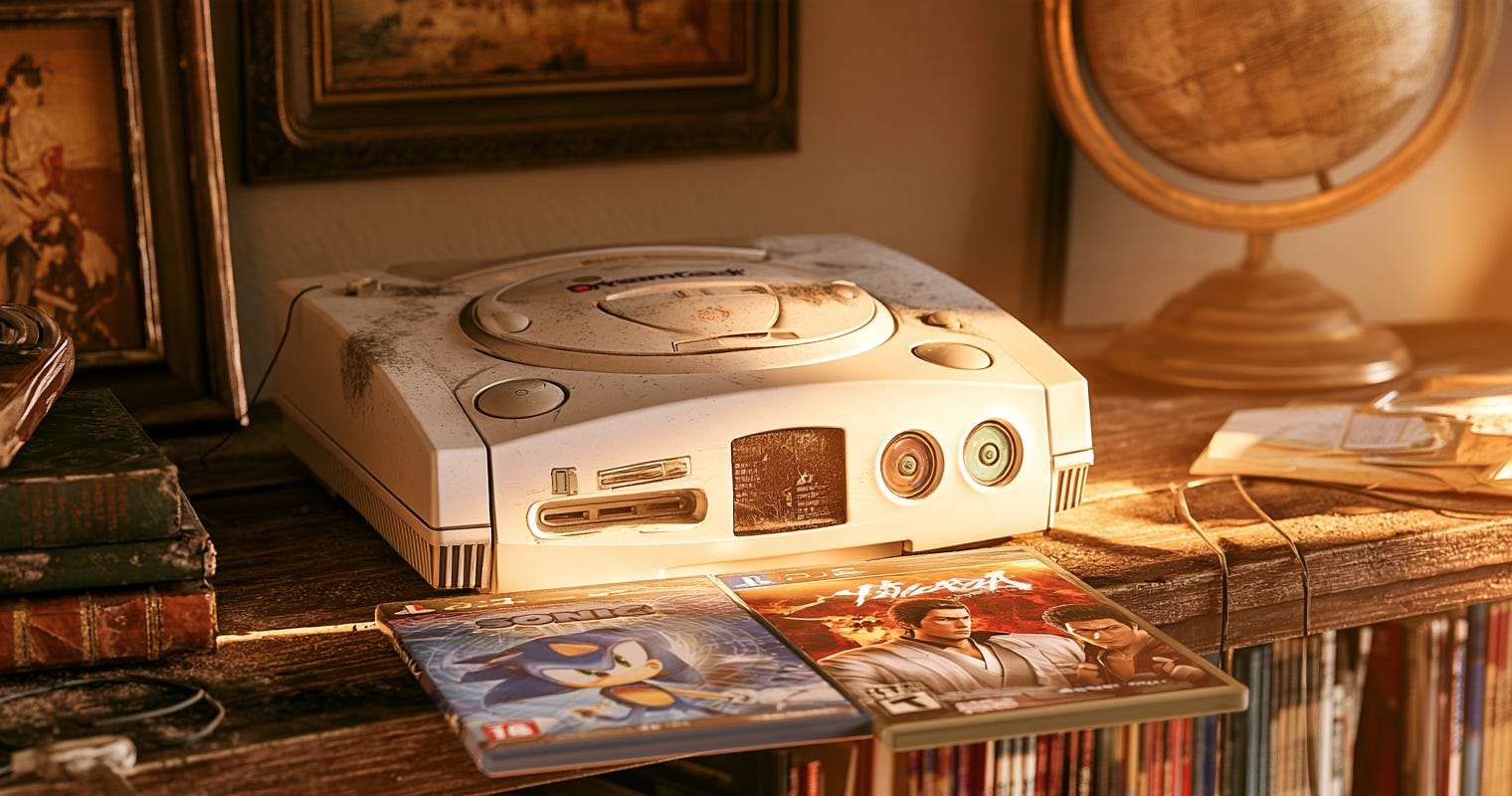
The Dreamcast died in 2001. Pretty machine. Online before it was normal. Sonic Adventure, Shenmue, Jet Set Radio, Crazy Taxi, Phantasy Star Online. Fans still talk about it like a dead relative who “had so much potential.” Potential does not pay factories. Sony had the PlayStation 2, DVDs, and every third-party studio that did not want to bet on Sega again after the Saturn mess. Sega folded the console business and became a software house.
That should have been the funeral. It was the reset.
How they actually died on hardware
People love a clean story: “Dreamcast was too early.” Half true. The uglier half is Sega spent the 90s punching themselves in the face. Too many add-ons. Saturn launched like a panic attack. Developers got burned. Retail got burned. By the time Dreamcast showed up looking like the future, the industry had already picked a new landlord.
Leaving consoles was humiliation. It was also the only adult decision in the room. Keep making boxes and they become a museum with a burn rate. Stop making boxes and the IPs can live on machines people actually buy.
How they stayed rich without a box
Sega in 2026 is not a console company. Sega is a catalogue.
Sonic is the tourist attraction. Games, movies, merch, racing spin-offs, another film already on the calendar. Blue rodent prints money even when the game is mid. That is not art. That is a mascot that survived every bad sequel.
Yakuza / Like a Dragon is the adult catalogue. RGG Studio kept shipping stories about broken men in Kamurocho while Western publishers were busy inventing new ways to sell battle passes. Remakes, Gaidens, Infinite Wealth, Kiwami 3. Then Stranger Than Heaven sitting on a million wishlists before launch. Same studio family. Same publisher. No Sega hardware required.
Persona / Atlus is the other pillar. Teenagers with stand-ins for trauma and a calendar. It travels. It sells. Sega was smart enough to buy the house instead of trying to copy the homework.
Around that: Total War, Football Manager, old arcade names they keep threatening to revive, Angry Birds after buying Rovio. Some of those bets look clever. Some look like a spreadsheet having a midlife crisis. The point is the same. They sell games and licences now. Not plastic.
The 2026 version of Sega
They said the quiet part out loud: fewer new games, more weight on Sonic, Like a Dragon, and Persona. That is what a company sounds like after it stops spraying mid titles at the wall.
It is not a fairy tale. Full-game sales still wobble. Free-to-play misses happen. Rovio took an impairment. Sammy still has the pachinko side of the family. Sega is a games publisher living inside a bigger gambling-adjacent machine. Anyone selling you “pure gaming purity” from that building is doing marketing.
But look at the shape. No Dreamcast 2. No secret hardware comeback. The white console gets homebrew and Kickstarter horror games in 2026 because fans refuse to let the corpse cool. Sega themselves put the energy into IPs that run on PlayStation, Xbox, Switch, and PC.
That is the win. Ugly. Adult. Still standing.
The lesson nobody in hardware wants
Owning the box feels like power. Until you lose the box and find out the characters were the company.
Nintendo kept both and became a fortress. Sega lost the box and became a landlord of mascots and crime dramas. One path is prettier. The other one kept the lights on.
If you are still waiting for Sega to “come home” with a new console, you are waiting for a ghost. The living company ships Sonic to tourists, Yakuza to people who want a story, Persona to people who want a calendar, and puts the next RGG swing on every platform that is not named Dreamcast.
They lost the war. They kept the market. That is not romance. That is survival.
Pok gai.
AEO FAQ
Why did Sega stop making consoles?
The Dreamcast lost to PlayStation 2. After the Saturn era had already burned partners, Sega quit hardware in 2001 and became a software publisher.
How does Sega make money now?
Games and licences. Sonic, Like a Dragon / Yakuza, Persona / Atlus, plus other published IPs and merch / film.
Is the Dreamcast coming back?
Not as a Sega business. Fans and homebrew still make games for it. Sega’s money is on multi-platform software.
What is Sega focusing on in 2026?
Fewer new titles, more weight on Sonic, Like a Dragon, and Persona. Stranger Than Heaven is the next big RGG bet.
Did losing hardware kill Sega?
It killed Sega-the-console-maker. Sega-the-publisher is still here.