
Paramount’s Gaming Grab: Hollywood Execs Don’t Learn
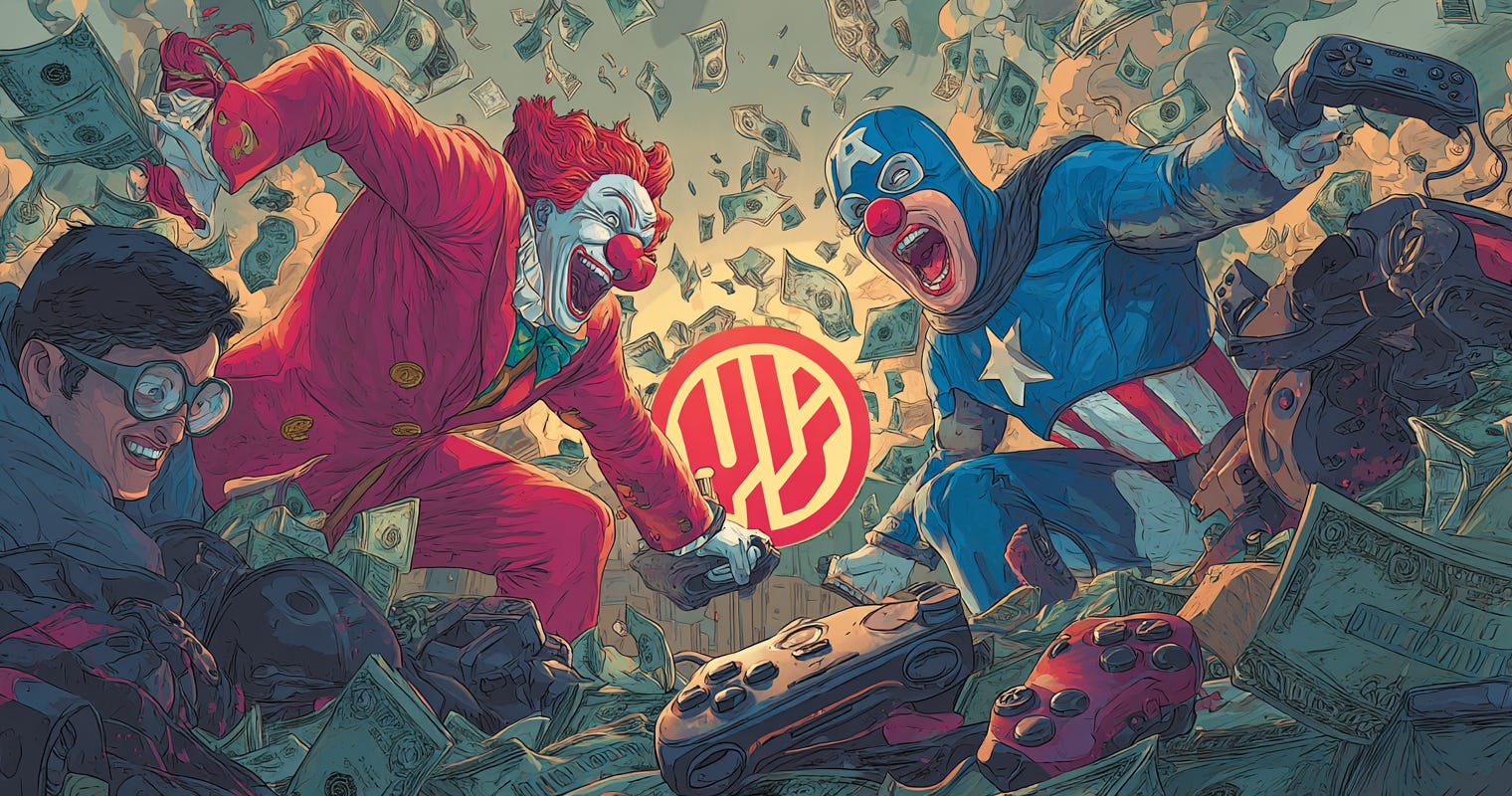
Paramount’s movie moguls think buying Warner Bros. Discovery (WBD) and its gaming arm WB Games will magically make them the next gaming superpower. After Netflix agreed to drop a cool ~$83 billion to acquire Warner’s studios, HBO, DC, and game division, Paramount Skydance crashed the party with an even bigger $108 billion hostile bid. Yeah, you read that right – the folks behind Top Gun and SpongeBob are ready to burn more cash than the GDP of some countries just to one-up Netflix. These Hollywood execs are so thirsty to pivot to gaming, it’s honestly 笑死人 (siu3 si2 jan4) – dead funny. They keep forgetting: making games ain’t like making movies, la. You can’t just buy some game studios like collectible toys and expect GG EZ wins.
In classic clown fashion, Paramount’s big boss David Ellison is hyping that his takeover will create a “stronger Hollywood” with more movies in theaters and “enhanced competition” - pcgamer.com. Bro, we see you – all this “best for creators and consumers” talk is just a smokescreen for a Hollywood turf war. Paramount is basically saying, “Netflix can’t be trusted with Warner Bros. because we’re the real Hollywood OGs.” Meanwhile, gamers are like: Who asked for this? None of us were sitting here thinking “Gee, I hope the Mission: Impossible studio buys Mortal Kombat.” 🙄 The absurdity meter is off the charts – movie execs swooping into gaming again, like it’s the sequel to every failed Hollywood gaming venture. (Remember when Disney tried to make games and then rage-quit? Yeah, good times.) Paramount’s bid reeks of the same old hubris: Hollywood suits assuming they can just respawn in the games industry and pwn it. Spoiler: they usually end up faceplanting.
Netflix Enters the Chat... and Immediately Fumbles
Netflix thought it had a GG (good game) moment when it struck a deal to nab Warner Bros. for $83B. For a hot minute, Netflix was flexing as if it had collected the Infinity Gauntlet of entertainment IP – from Hogwarts to Gotham, Looney Tunes to Game of Thrones. But guess what? Netflix doesn’t even care about the gaming part of that loot drop! The company literally admitted it “didn’t attribute any value” to WB’s game studios in the deal because they’re “relatively minor compared to the grand scheme” -pcgamer.com. 睇吓嘞 (tai2 haa5 lak3) – look at that. Netflix’s co-CEO basically said WB Games is worthless to them. That’s a clown-tier take if we ever saw one. WB Games just produced Hogwarts Legacy, one of 2023’s top-selling games, and Netflix is like “meh, not part of our master plan.” Talk about not getting it.
Consider this: a few years ago Netflix was bragging how Fortnite was a bigger competitor than HBO. They even bought some small studios and put mobile games in the Netflix app. Fast forward to now – they shut down or sold off those studios (R.I.P. Boss Fight, Team17, Spry Fox) and shifted focus to… AI gimmicks - pcgamer.com. By the time they bid for WB, gaming was an afterthought – mentioned like twice in a massive investor deck. Netflix basically speedran from “games are the future” to “games who? 🤷” in record time. Gregory Peters (Netflix’s co-CEO) said out loud that WB’s gaming assets weren’t built into their deal model - pcgamer.com. Translation: We’re buying Warner for Batman and Harry Potter, not for Mortal Kombat. If Netflix wins this battle, I bet they’ll treat WB Games like some extra DLC – nice to have, but not core. Gamers might get a token “Netflix Games presents Hogwarts Legacy 2” on the mobile app or something, but do we trust Netflix to nurture those studios? 哈! (haa3) Hell no. They’ll probably milk the franchises for Netflix shows and forget to upgrade the actual games.
And let’s not ignore how clownish this media bidding war has become. Netflix’s deal isn’t even closed and it’s already a circus: regulators sharpening knives, Trump chiming in that the Netflix-Warner combo “could be a problem” (gee, subtle), and Netflix having to reassure everyone with fake smiles. It’s like a cringey crossover episode of Succession and Game of Thrones, but with streaming CEOs instead of dragons.
Saudis Insert Coin: PIF’s Power Play
Just when you thought this Warner Bros. saga had enough clowns, Saudi Arabia’s Public Investment Fund (PIF) shows up with a bucket of cash and some extra drama. Paramount didn’t pull that $108B out of thin air – they got backup from Larry Ellison (Oracle billionaire and MAGA buddy) and surprise, Jared Kushner’s investment firm, plus a cabal of Middle Eastern money. Yes, the Saudis are essentially bankrolling a huge chunk of Paramount’s bid. The same PIF that’s been on a shopping spree in gaming – they already teamed up with Kushner to yank Electronic Arts (EA) private for $55 billion earlier this year. That EA deal was the biggest gaming buyout ever (yo, even bigger than Microsoft gobbling Activision - axios.com). Now PIF is like “more, give me more!” – eyeing Warner Bros. like it’s the next shiny Pokémon to catch.
Let that sink in: Saudi Arabia will effectively own chunks of Hollywood and a major game publisher in one go if Paramount’s plan succeeds. It’s as if MBS entered a cheat code for unlimited $$$ and is collecting entertainment IPs like achievements. For gamers, this is a mixed bag. On one hand, PIF’s deep pockets mean they could pour money into WB Games – maybe fund more game dev, bigger projects. On the other hand, do we really want the Saudi regime as the final boss of our favorite game studios? 😬 It’s the same PIF that now owns 90+% of SNK (of King of Fighters fame) and big slices of Capcom and Embracer. Their track record so far has been mostly hands-off, but it’s hard not to feel icky about where the profits go (like, cough financing propaganda or worse). Also, with Trump’s son-in-law Kushner in the mix greasing wheels, this whole deal smells political AF. Paramount’s basically saying “Hey, let us buy Warner and we’ll make sure Trump and friends are happy – even CNN will behave.” Bruh. Gamers didn’t sign up for this geopolitical telenovela. We just wanna mash buttons and get headshots, not wonder if our game’s new owner might censor content to appease authoritarian sensibilities.
The absurdity escalates: PIF’s involvement turned this deal into a bizarre East-meets-West power play. Tencent was even going to chip in before someone realized having China’s giant involved would invite regulatory ultra-combos (CFIUS finisher move). So they dropped Tencent like a hot potato to keep the focus on Team Saudi/Trump. This is the level of clownery we’re at – media CEOs, oil princes, and ex-presidents’ kin all elbowing into a deal over freaking Warner Bros. It’s like the Illuminati of Clowns formed a guild for one epic raid.
WB Games Is 🔥 (Not Just Tie-In Trash)
A Warner Bros. Games banner at E3 Expo. Once just a sidekick to the film studio, WB Games has leveled up with blockbuster franchises that put many Hollywood tie-in games to shame.
Let’s get one thing straight: WB Games is not some disposable McDonald’s Happy Meal toy line. It’s one of the few Hollywood-owned game divisions that actually makes bangers. We’re talking Mortal Kombat, the legendary fighting franchise that’s been ripping spines out since the ‘90s (and still sells like hotcakes). We’re talking Batman: Arkham series, which basically schooled every other superhero game on how it’s done (Rocksteady’s Arkham City sold over 12 million copies and set a gold standard). And of course, Hogwarts Legacy, which let players live their Wizarding World dreams and in 2023 became the best-selling game of the year worldwide, moving over 22 million copies in under a year - pcgamer.com (30 million by now, probably). These aren’t cheap movie tie-in games that you toss out like stale popcorn – they’re full-fledged, damn profitable titles with their own fanbases. WB Games has genuine franchise strength, as even industry analysts noted with the commercial success of Mortal Kombat and Hogwarts Legacy. In other words, 這間game studio勁正啊 (ze5 gaan1 game studio ging6 zing3 aa3) – this game studio is freaking awesome.
So when Netflix’s geniuses say WB’s game studios are “minor” - pcgamer.com, I about spat out my milk tea. And if Paramount thinks it’s just buying a content IP library to turn into more streaming shows, they’re sleeping on a gold mine. WB Games has been under Warner’s shadow, sure – the suits upstairs have put its head on the chopping block before, eyeing sell-offs whenever Warner needed quick cash. But the studios (NetherRealm, Rocksteady, Monolith, etc.) kept cranking out hits despite the corporate buffoonery. They’ve proven that with proper support (and not treating them like a promo merch department), they can deliver mega-hits and critically acclaimed games. Gamers actually love a lot of WB’s games – look at the consistent hype for Mortal Kombat 1 or the way Arkham Knight had us in a chokehold waiting for release. These aren’t second-fiddle assets; they’re marquee names in gaming. If the new owner actually invests in them rather than treating them like comic book IP farms, WB Games could be a freaking powerhouse. But that’s a big “if,” given the track record of these Hollywood clowns.
Streamers Don’t Get Gamers (Stop Fumbling the IP)
Why do these streaming and Hollywood companies keep fumbling the controller when they try to play in the gaming arena? Simple: they don’t understand gamer culture or game development, period. Executives are used to the old Hollywood model: drop a big movie/series, do a red-carpet premiere, bask in the glory (or flop, then blame marketing). Games, though? Whole different ballgame, bruh. Games require a long-term grind and community engagement that these execs can’t wrap their heads around. As one analyst put it, Hollywood likes one-and-done content drops, but game companies treat players as collaborators, with ongoing updates, early access, Discord chats, mods, you name it. In other words, you don’t just “release and ignore” – you constantly dance with your player base or your game dies. Netflix and its ilk are used to subscribers binge-watching passively; they’re noobs at fostering active player communities.
Look at Netflix’s track record: they licensed a Stranger Things game here, bought Night School Studio there, but have they created a single original hit game? Nope. They’re too busy trying to algorithmically predict fun (newsflash: you can’t). Meanwhile, Amazon (another streaming giant wannabe gamer) flopped with projects until they stumbled on New World and even that fizzled; Google Stadia died an epic death. It’s almost comedic: these tech/media giants jump into gaming thinking it’s just software + stories, then rage-quit when they realize it requires a totally different XP grind (experience and patience). They also have a nasty habit of mishandling game IPs – either by churning out crappy adaptations or by not giving games the creative freedom they need. Remember the Halo TV series on Paramount+? Yeah, the one that had fans divided and scratching heads. Paramount hyped its “unique interactive capabilities” with Skydance to justify buying WB, but their idea of “interactive” so far has been turning games into mediocre shows and movies. The Halo show under-delivered, and they’re planning a Call of Duty movie next – which, let’s be real, could either be decent or an utter cringe-fest. These guys think owning IP = success across all media. But if you don’t understand why gamers love an IP, you’ll screw it up when you adapt or extend it. We’ve seen it time and again: Great games butchered by Hollywood (Resident Evil, Assassin’s Creed movies, anyone?), and conversely, great IPs wasted on shallow games.
Netflix’s own co-CEO Greg Peters basically shrugged off building game development capabilities, admitting they haven’t “built that into our model” - pcgamer.com. At least Paramount’s Ellison is talking about combining WB Games with Skydance’s game studios led by Amy Hennig (a legit industry legend). That sounds promising on paper, but talk is cheap. Until these companies show they can play the long game – invest in studios, respect gaming IP timelines (which can be 5+ years of dev, not churning seasonal content), and cultivate gamer trust – they’re gonna keep fumbling. Right now, it feels like they’re picking up a controller with greasy popcorn fingers. Gross and ineffective.
If Netflix Wins vs. If Paramount Wins: What Do Gamers Get?
So, what’s in it for us gamers, huh? We’re watching this corporate WWE match from the sidelines, and it’s time to speculate on the loot (or losses) we might get depending on who pins Warner Bros. for the 3-count:
If Netflix Wins: Short-term, maybe not much changes for gamers. WB Games would become a tiny cog in the giant Netflix machine. Best case, Netflix bundles some WB Games titles into its service – like, “Play Hogwarts Legacy 2 on Netflix Gaming, free with your sub!” Could be cool if they do it, since Netflix has been dabbling in cloud gaming. And perhaps we’d see more Netflix-funded game adaptations (they’ve done well with Cyberpunk Edgerunners and Arcane after all, though those were external IPs). But I ain’t holding my breath. Netflix’s brass has basically downplayed games, so they might sell off parts of WB Games or just let it stagnate. They might greenlight a Witcher-style series for, say, Mortal Kombat or Arkham, which could be 🔥 if done right. But game development itself? Might take a backseat. Imagine beloved studios like Rocksteady reduced to making interactive episodes for Netflix or churning mobile tie-ins – 哎呀 (aiya), nightmare fuel. Netflix could also push more micros and live-service BS into WB titles to boost “engagement”, because that’s their mindset. Worst case, some WB game projects get canceled because they don’t fit Netflix’s content algorithm. Gamers could lose quality standalone titles in favor of always-online, synergistic fluff.
If Paramount (Saudis) Wins: This route is wild. On one hand, Paramount actually talks a big game about games – they’d likely fold WB Games into a beefed-up Skydance Games. We might see Mortal Kombat 12 or Injustice 3 with even bigger budgets, or a proper Harry Potter MMO finally, since the new owners might want to flex on Netflix. The Saudis clearly have no issue dropping cash (they funded Kingdom Come: Deliverance 2 and other projects via investments). We could see crazier crossovers too: PIF owning both EA and WB could mean, who knows, maybe a FIFA Street: Gotham Edition 😂 or some EA sports tech improving WB’s games. They might also push WB’s dev studios into new markets (more mobile games for the Middle East? more esports events sponsored in Riyadh? It’s possible). On the other hand, I worry about the creative freedom under Saudi-influenced ownership. PIF didn’t mess with EA’s content (so far), but WB’s IPs like DC or Harry Potter could hit sensitive cultural notes. What if MBS & co. aren’t cool with certain storylines or characters? Do we see subtle censorship or tonal shifts to keep the new bosses happy? Gamers could also lose out if the new owners decide to restructure and sell pieces for profit (there’s chatter that EA might sell off studios post-buyout, which could happen at WB Games too – imagine NetherRealm spun off or some studios shuttered 😢). Plus, having Trumpworld ties in the mix raises the question: do politics start affecting content? (Hard to imagine directly, but the mere association is yikes.) One immediate “gain” if Paramount wins might be no regulatory purgatory – they argue they can close the deal faster than Netflix - pcgamer.com, so WB Games wouldn’t be stuck in limbo waiting. That could mean projects like the next Mortal Kombat or Arkham continuation get clarity sooner. Small silver lining, I guess.
At the end of the day, neither outcome is pure win for gamers. Netflix winning could mean a stable home but one that doesn’t truly appreciate games. Paramount winning means owners who say games matter, but come with baggage (and possible loot boxes of political weirdness). It’s like choosing between two buffets and worrying one has no food you like, while the other might give you food poisoning. 顶硬上 (dang2 ngaang6 soeng5) – we just have to bite the bullet and hope for the best.
Conclusion: Gamers Brace for a Corporate Circus
This whole fiasco really underscores one thing: Hollywood needs to stop thinking it can just press “Start” and master the game industry on Day 1. We’ve got a front-row seat to a clown-tier corporate circus, and frankly, we’re not amused. Paramount, Netflix – even Mickey Mouse money (Disney) or Big Tech – all these players see the $$$ in gaming and come barreling in without respect for the culture. They treat game studios and beloved IPs like poker chips in their high-stakes media consolidation game. And here we are, the gamers, watching our favorite franchises get tossed around by execs who probably don’t know an FPS from a F2P.
It’s infuriating, but also darkly funny. One streaming giant is so algorithm-brained it can’t comprehend why engaging with gamers matters; the other studio is so desperate to stay relevant it’s literally in bed with oil money and political nepotism. 係喇, 搞到咁 (hai6 laa1, gaau2 dou3 gam3) – yeah, look at this mess. In the end, whoever ends up owning Warner Bros. (and by extension WB Games), we gamers will adapt like we always do. We survived Microsoft swallowing Bethesda, Tencent snatching Riot, and all sorts of mergers. We’ll survive this too. But don’t expect us to cheer for either side of this clown show. As the Pok Gai Gamer in me would say: all you execs, 收皮啦 (sau1 pei4 laa1) – shut it and sit down – and maybe try not to ruin our games, okay?
Now if you’ll excuse me, I’m off to replay Arkham City and pretend these corporate jokers aren’t plotting its future. 🎮🤡
FAQ (Frequently Asked Questions)
Q1: Is Paramount really trying to buy Warner Bros. and WB Games?
A: Yes. In a wild turn of events, Paramount (with Skydance) launched a hostile bid to acquire Warner Bros. Discovery, including the WB Games division, for about $108 billion. This came right after Netflix thought it had a deal to buy those same assets for ~$83 billion. Paramount is basically saying, “We want the whole thing – movies, TV, and game studios – under our roof.” It’s not just a rumor; they’ve gone directly to WBD’s shareholders with this offer. If it goes through, Paramount would own everything from Warner’s film library and HBO shows to game franchises like Mortal Kombat and Batman. It’s an unprecedented move – essentially one Hollywood studio trying to swallow another whole, games and all. 🎥🎮
Q2: Why does Netflix want Warner Bros., and do they care about the game studios?
A: Netflix wants Warner Bros. for the massive library of films/series and iconic IP (think DC characters, Harry Potter, HBO content). Owning that treasure trove would instantly make Netflix a content superpower beyond streaming. However, when it comes to WB Games, Netflix doesn’t seem to care much. Netflix’s execs admitted they assigned no real value to the game division in the deal because they see it as minor - pcgamer.com. Netflix is focused on beating rivals with streaming content; games are an afterthought. They have dipped into gaming by offering mobile games to subscribers, but if they acquire WB, it’s primarily about shows and movies. The game studios might be kept if they can produce tie-in content, or Netflix could even spin them off later. Simply put, Netflix is into this for Hollywood clout; the gaming side is like bonus DLC they’re not that interested in. 😐🎬
Q3: How is Saudi Arabia’s Public Investment Fund involved in all this?
A: Saudi Arabia’s PIF is a major player bankrolling Paramount’s bid. They, along with other Middle Eastern investors (and Jared Kushner’s firm), have committed a huge chunk of the financing – around $24 billion – to support Paramount’s $108B offer. This isn’t PIF’s first gaming/entertainment foray; they teamed up with Kushner earlier to buy out Electronic Arts for $55B. In the Warner Bros. deal, PIF’s money gives Paramount extra firepower to outbid Netflix. In return, the Saudis would gain an ownership stake in the combined company (meaning they’d indirectly own pieces of Warner’s film and game empire). Essentially, the Saudi fund is using its oil-rich war chest to become a power broker in Hollywood and gaming. It’s a strategic investment for them to diversify and wield soft power via media. For better or worse, if Paramount’s takeover succeeds, the Saudi PIF will be in the passenger seat alongside Paramount on the Warner Bros. ride. ⛽💰🎞️
Q4: What makes WB Games such a big deal? Aren’t movie-based games usually bad?
A: WB Games is a big deal precisely because it’s not just churning out cheap movie tie-ins. It oversees a bunch of top-tier game development studios and IPs. For example, NetherRealm Studios (under WB) makes Mortal Kombat, one of the most famous fighting game series ever. Rocksteady Studios (also WB-owned) made the Batman: Arkham series, which revolutionized superhero games. And earlier this year, WB Games published Hogwarts Legacy, an open-world Harry Potter game that sold over 15+ million copies in a few months and was the best-selling game of 2023 - pcgamer.com. These games are critically acclaimed and loved by fans – far from the old stereotype of lousy movie tie-in games. WB Games also has other hits like the LEGO game series, Shadow of Mordor, and more. So whoever buys Warner Bros. isn’t just getting film studios; they’re also getting a vault of gaming IP and talent. It’s a huge value-add (even if Netflix bizarrely ignores it). In short, WB Games is a powerhouse in its own right, and gamers care a lot about its future. 🎮🔥
Q5: What could happen to WB’s games and studios if Netflix wins vs. if Paramount wins?
A: If Netflix wins, expect a more conservative approach. Netflix might integrate WB’s game studios slowly or not at all into its plans. We could see some WB Games titles folded into Netflix’s service (maybe playable via cloud or mobile as part of your subscription). But Netflix might also downsize parts of the gaming division since they haven’t been very game-focused. Some projects could be shelved if they don’t align with Netflix IP plans. The upside: Netflix’s ownership could bring cross-media opportunities (like Netflix shows based on WB games, or transmedia events). The downside: WB game studios might not get the investment or freedom to continue big ambitious projects unless they tie into Netflix’s video content strategy.
If Paramount wins, backed by PIF, they’d likely put more emphasis on gaming. Paramount has signaled it would merge WB Games with its Skydance Games unit and leverage those “interactive capabilities”. So we might see more big-budget game projects, possibly new games using both Paramount and WB IP (imagine a crossover or utilizing Paramount franchises like Mission: Impossible in games). PIF’s deep pockets could mean more capital for game development, too. However, there’s potential downsides here as well: new management could restructure the studios, possibly merging or even selling off ones that don’t fit their plan. There’s also the question of creative direction – with investors like PIF and Kushner involved, some worry about changes in content or priorities (though nothing concrete suggests they’d meddle in game content). In summary, Netflix winning might keep things status quo (but risk under-investment), while Paramount winning could energize WB Games with investment (but bring more corporate shake-ups). Either way, gamers should brace for some changes, good or bad, as these new owners take the helm. 🎮🤔
Q6: Why are gamers skeptical or negative about these big media takeovers?
A: Gamers are skeptical because we’ve seen a pattern of big corporate takeovers not really benefiting the players. When non-gaming conglomerates buy game companies, oftentimes the focus shifts to short-term monetization or IP exploitation rather than player experience. In this Warner Bros saga, it feels like gaming is a pawn in a larger streaming war. Netflix and Paramount are primarily interested in Warner’s movies and shows – gaming is secondary. Gamers worry that a new owner might not understand game development cycles, might cancel projects that don’t have immediate cross-media appeal, or might lay off staff to cut costs after a mega-merger (a common occurrence). There’s also concern that creative franchises could be milked dry or altered to serve some Hollywood agenda. Plus, each potential buyer comes with baggage: Netflix might prioritize streaming engagement over game quality, and Paramount’s bid brings in political and foreign investors that make people uneasy about who controls their entertainment. In short, gamers are calling BS because we’ve seen how out-of-touch suits can mess up great studios. We love WB Games’ output and don’t want to see it ruined by corporate ego trips or clueless strategic moves. 🎲💔