
From DVDs to DLCs: Netflix’s Strange New Quest
Remember when Netflix was just that red envelope DVD mail service ah? Then it became the streaming laoban (boss) that killed Blockbuster. Now this fella suddenly wanna be Sony or Xbox or what. In a move nobody saw coming, Netflix decided to buy Warner Bros. Discovery for $82.7 billion - gameinformer.com. Yes billion with a B, – all so it can own a Hollywood studio and a bunch of game developers. The same Netflix that gives you K-dramas and Squid Game now owns Mortal Kombat and Batman video games - gameinformer.com. Stranger Things have happened? Maybe not lah.
Netflix stepping into gaming feels damn weird. It’s like if Disneyland suddenly announced it’s making machine guns – huh? This company built its empire on streaming movies and chilling, not pwn-ing noobs in Call of Duty. But now Netflix wanna be everything, everywhere, all at once: your TV, your cinema, and your game console. Talk about an identity crisis lor. Even Wired also said Netflix never really had a brand identity – it’s “a jack of all trades and a master of none” until it dropped $83B to buy itself a new personality- wired.com. Buying Warner Bros (home of Harry Potter, DC superheroes, Game of Thrones, you name it) gives Netflix a century of prestige film/TV content and a ticket into the games industry. They basically speedran what Disney did in decades. But can money really buy gamer cred meh?
Netflix Games: Big Library, Small Audience
Not many people know this, but Netflix actually already has games in its app – over 120 mobile games at last count- netflix.com. If you’re like most of us, you probably scrolled past that hidden Games tab on your Netflix app without even tapping. They got casual stuff like Cut the Rope, indie hits like Dead Cells, even some AAA classics like Grand Theft Auto: San Andreas and Red Dead Redemption mobile ports available “free” with your Netflix subscription- gameinformer.com. Sounds impressive, right? But here’s the joke: less than 1% of Netflix’s ~247 million subscribers actually play these games daily - 80.lv. Less than one percent lah! Basically, Netflix’s gaming section is like a ghost town – a big library of games nobody’s borrowing.
Why so miserable? Honestly, Netflix Games so far macam extra feature that nobody asked for. The games are mobile-only, not available on your TV or PC (well, until recently – more on that later). You have to download each game separately from the app store; the Netflix app just authenticates you. So it’s a bit leceh (troublesome). And while not having ads or microtransactions is nice, these are mostly mobile games that hardcore gamers tarak care. Netflix did invest though – they acquired small studios like Night School Studio (makers of Oxenfree) and Next Games (a mobile dev) to build their catalog- 80.lv. They even partnered with the studio behind Life Is Strange on a mysterious new game- gameinformer.com. But until now, none of these efforts made Netflix a serious “player” in games. It’s like they opened a huge arcade in a quiet back alley – good games available but no one shows up.
Enter Warner Bros Games: Netflix’s New Toys
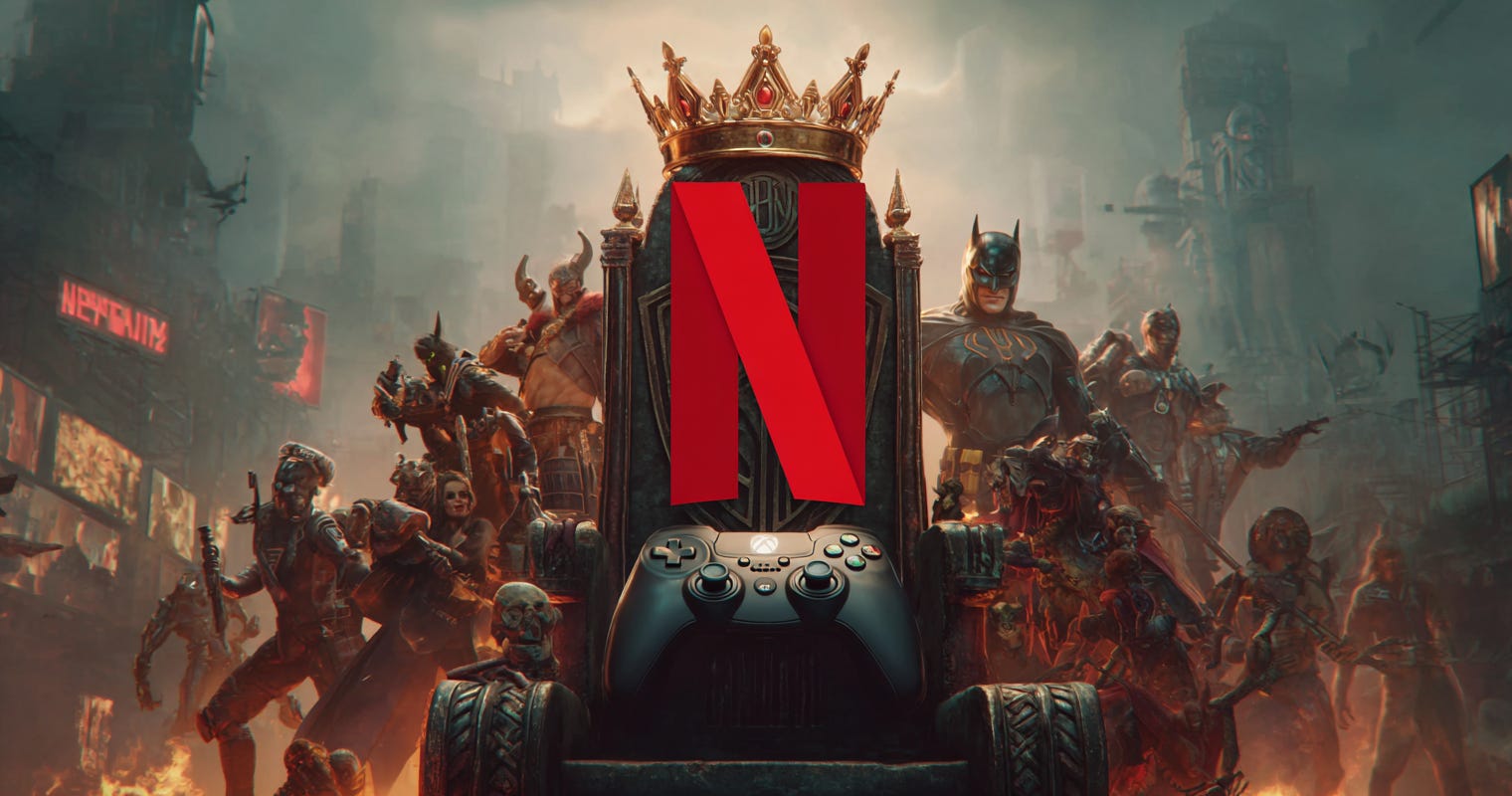
So how to get gamers to notice Netflix? Easy lah, just buy a whole gaming empire! With this Warner Bros deal, Netflix will suddenly own some of the biggest game studios and franchises. This is like a kid who’s bad at a video game just purchasing a max-level account – instant power-up. Here’s a quick loot drop of what Netflix gains from WB Games:
NetherRealm Studios – the folks behind Mortal Kombat. (Finish him… on Netflix?)
Rocksteady Studios – creators of the Batman: Arkham series and the upcoming Suicide Squad game. Dark gritty action – now under a company known for Bridgerton, lol.
Avalanche Software – developers of Hogwarts Legacy, the massive Harry Potter game. Netflix didn’t get the Hogwarts letter, so they bought the whole school lah.
TT Games – the studio for LEGO video games (Lego Batman, Lego Star Wars, all that). Maybe we’ll see Lego Stranger Things next, who knows?
WB Games Montréal – made Gotham Knights and Arkham Origins. Now maybe they can fix Netflix’s The Witcher by making it a game (since that show also koyak a bit).
And more smaller studios here and there. In short, Netflix suddenly has an army of game developers at its command, working on real games for PC and consoles, not just mobile tie-ins. This is a huge level-up compared to its previous game portfolio. Yesterday Netflix was offering you dating sims and puzzle games on your phone; tomorrow it could be publishing the next Mortal Kombat 12 or a new DC superhero game on PlayStation 6. Damn lah, talk about leapfrogging.
But here’s the catch (always got one): Does Netflix actually know how to run a game studio? Owning is one thing, managing is another. These WB studios are used to publishers like WB or other game-focused parents. Now their boss is a streaming company whose idea of interactivity was letting you choose if you want to kill or kiss in a Black Mirror: Bandersnatch episode. I bet some of those game devs are kan cheong (nervous) now. Corporate synergy speeches incoming!
Stranger Things, Meet Mortal Kombat?
Netflix has some iconic original IPs – think Stranger Things, Squid Game, Wednesday Addams. They’ve already dabbled turning these into games: e.g., Stranger Things 3 had a retro style game, Squid Game has countless unofficial Roblox clones (lol), and Netflix announced it’s making official mobile games for shows like Black Mirror and Wednesday80.lv. Now throw Warner’s franchises into the mix. The crossover potential is both exciting and a bit absurd:
Could we see Eleven from Stranger Things guest-fighting in Mortal Kombat? (Her nosebleed fatality would be epic lah.)
Maybe Netflix makes a new Game of Thrones RPG with choices that actually let you save your favorite character for once.
They own DC now, so imagine a gritty Arkham-style game for Netflix’s own characters – “Stranger Things: Arkham Hawkins” or some nonsense.
Or reverse it: HBO (now Netflix’s property) gets to make prestige TV shows out of games. A Mortal Kombat TV series that’s actually good? A Hogwarts Legacy streaming series (because why not milk that Harry Potter cow further)?
On paper, this is the dream of “transmedia.” Netflix can take a popular show, make a game out of it internally, and take a hit game and instantly greenlight a show. No licensing nightmares, since one company owns everything. We might get more interactive experiences too – Netflix could revive the idea of playable streaming content. They already started putting games on TVs (you can play Netflix games on your smart TV using your phone as a controller now)gamigion.com. They really want you to never leave Netflix: watch show, play game of that show, vote in a live interactive event, buy merch, repeat. It’s like the Matrix of entertainment lah.
Still, synergy is easier said than done. Remember when Microsoft bought Rare and we got Kinect Sports instead of good Banjo-Kazooie? Or when Google started its own game studio for Stadia and then shut it down a year later? Big companies always think they can do games – “how hard can it be, right, it’s just content” – but end up kena smack by reality. Netflix integrating Stranger Things into Mortal Kombat could either print money or be the cringe moment of the decade. At this point, nothing would surprise me. (Okay maybe one thing: if they put Ads in games like they just did in their cheaper subscription tier… pls no lah.)
Tech Bros Love ‘Synergy’ – But Gamers?
Corporate speak incoming: Netflix co-CEO Greg Peters said this Warner deal will “improve our offering and accelerate our business for decades to come” and talked about introducing audiences to more worlds and blah blah. Notably, in all these press releases and calls, Netflix barely mentioned games at all – one tiny Mortal Kombat logo flashed on a slide, and that’s it. They were busy boasting about HBO, DC, and the films and TV library. To me, that says something: Netflix higher-ups still see this as a Hollywood play first, gaming play second. The games division inclusion was almost an afterthought publicly (until press asked and they confirmed yeah-yeah games included). Possibly because they “didn’t attribute much value” to the game studios compared to the massive film/TV assets, as one report noted. Ouch, that hurts – imagine being a dev at Rocksteady hearing your new boss say your whole studio is just cherry on top.
For gamers, the skepticism is real. We’ve seen Amazon try to become a gaming powerhouse – mixed results (New World had one hit, many misses). Google tried with Stadia – R.I.P. And these companies at least have tech DNA. Netflix is an entertainment company that’s now got some tech in its veins, but running live service games or AAA dev cycles is a whole different ballgame. There’s fear that Netflix might treat game studios like it treats TV productions: give them money initially, but if the first game doesn’t produce instant subscriber boosts, cancel lah (Netflix is notorious for canceling shows after 2 seasons even if fans scream). Game development requires patience; does Netflix have that patience? Or will they do a Warner Bros Discovery special and start axing projects and teams to save cost?
Speaking of cost, Netflix already said they expect $2–3 billion of cost savings with this merger. Synergy often means layoffs, consolidation. We just saw Microsoft, after buying Activision Blizzard, eventually lay off a ton of staff and raise prices on Game Pass. So if Netflix goes the same route, we might see beloved studios lose talent or get merged into Netflix’s in-house teams. Worst case, they force every WB game to be a Netflix exclusive (imagine you need a Netflix account to play the next Batman game – oh lawd). Gamers will riot I tell you.
On the flip side, maybe this could work if Netflix lets the game studios do their thing and just provides the $$$. They’ve done okay with some of their acquired studios making mobile games; they didn’t interfere with Night School’s Oxenfree II development much, which turned out decent. If they apply a light touch and just focus on leveraging IP (like “make a high-quality Stranger Things open-world game, here’s funding”), there’s a chance of cool stuff. But that’s a big if. Tech bros love meddling – some product manager will come and say “what if we integrate Netflix achievements or require watching a show to unlock a game reward” – please lah, don’t.
Pok Gai Final Verdict: GG or BG (Bad Game)?
So, will Netflix’s gaming adventure GG or go Game Over? Honestly, it’s 50-50 and quite entertaining to watch (popcorn time!). On one hand, Netflix owning Warner Bros gives it insane IP flex. It’s now a content dragon hoarding treasure – from HBO hits to DC heroes to Mortal Kombat fatalities – all under one roof. If they pull off the integration, we could get some awesome cross-media experiences. On the other hand, history shows throwing money at an industry doesn’t guarantee success lah. Gaming audiences are fickle and have long memories; a single flop or a whiff of corporate BS and they’ll panggang (roast) Netflix on Reddit and ResetEra.
My take: Netflix is power tripping a bit, trying to be the Thanos of Entertainment – collecting all the infinity stones (Movies, TV, Games, maybe Podcasts next?) for the ultimate snap. It might end in balance or in dust. For now, I’m cautiously interested but also si beh (extremely) skeptical. Dear Netflix, finish your own plate first lah – you still haven’t fixed password sharing drama, your live-action anime adaptations mostly suck, and I’m still waiting for Mindhunter Season 3 you canceled! Now you add game studios to your to-do list. Haiyaa. Good luck, you’ll need it.
Pok Gai Rating: 2️⃣/5️⃣ on the Synergy-O-Meter – Plenty of IP power, but execution is a big question mark. Prove me wrong, Netflix, or this will be another expensive lesson. Don’t play-play, okay? 🎮😏
Disclaimer: If Netflix puts Geralt of Rivia in a Marvel movie or makes me play a Friends MMO, I reserve the right to poke their eye again lah.
FAQ
1️⃣ Did Netflix really acquire Warner Bros.?
Yes, as of December 2025 Netflix announced a deal to acquire Warner Bros. Discovery (minus some spun-off parts) for a whopping $82.7 billion - gameinformer.com. This includes Warner’s film/TV studios (like Warner Bros. films, HBO, etc.) and its video game division WB Games. The deal isn’t finalized yet (expected to close in 12–18 months pending regulatory approval), but Netflix won the bidding war against other companies to snag Warner Bros - wired.com.
2️⃣ Why did Netflix buy Warner Bros.?
Netflix is aiming to become an all-in-one entertainment powerhouse. By buying Warner Bros, Netflix gets huge franchises and IPs – from Harry Potter to Batman to Game of Thrones – which it can use for streaming content and games. Essentially, Netflix wants to own the popular stories and characters instead of licensing them. It also instantly gains Warner’s expertise in movie-making and game development. In short, the acquisition is about controlling big IP libraries and expanding Netflix’s empire beyond streaming into traditional Hollywood and gaming at the same time. It’s a synergy play (movies + TV + games under one roof), hoping to attract and retain subscribers with tons of exclusive content across mediums.
3️⃣ What game studios does Netflix own now (after this deal)?
Netflix will own all of Warner Bros. Games, which includes several major game development studios. Notable ones are NetherRealm Studios (makers of Mortal Kombat), Rocksteady Studios (known for the Batman: Arkham series), Avalanche Software (developers of Hogwarts Legacy), TT Games (famous for the LEGO video games like Lego Batman), and WB Games Montréal (maker of Gotham Knights)- gameinformer.com. These studios come along with the franchises they work on, so Netflix effectively owns those game series now. Netflix also previously acquired smaller studios like Night School Studio (Oxenfree), Next Games, and Spry Fox, but the WB Games acquisition is on a whole different scale, putting Netflix in charge of multiple AAA game teams.
4️⃣ How many games does Netflix have, and what are they?
Netflix currently offers around 100+ mobile games (reports say over 120) as part of its subscription - netflix.com. These are available through the Netflix app on Android and iOS (and recently on some TVs). The catalog ranges from casual games (Stranger Things: 1984, Card Blast), to indie hits (Oxenfree, Spiritfarer), to even some well-known titles like Dead Cells, Into the Breach, Minecraft Story Mode, and mobile versions of Grand Theft Auto: San Andreas and Red Dead Redemption - gameinformer.com. All Netflix games are free to download for subscribers, with no ads or microtransactions. However, until the Warner deal, Netflix’s games were mostly mobile-centric. Post-acquisition, Netflix will also “have” big console/PC franchises (Mortal Kombat, etc.), though integrating those into Netflix’s service is a challenge they’ll figure out later.
5️⃣ How can I play Netflix’s games?
To play Netflix games, you need an active Netflix subscription and a compatible device. On mobile (Android or iOS), open the Netflix app and find the Games section. When you pick a game, it will redirect you to download the game from the App Store/Google Play – then you log in with your Netflix account to play. There’s no extra fee for these games as they’re included in your subscription, and they have no in-app purchases or ads. Recently, Netflix also started rolling out games on TVs and PCs via cloud streaming - gamigion.com – you can launch games on a smart TV Netflix app and use your phone as a controller. This feature is new and limited to certain games and devices (and PC via web browser in some regions). As Netflix integrates bigger titles from WB, we might see more cloud gaming or even console releases, but for now, it’s mainly a mobile gaming perk with some early steps into TV/cloud gaming.
6️⃣ Will Netflix’s push into gaming actually succeed?
That’s the billion-dollar question! Netflix has a mixed road ahead. On one hand, owning beloved game studios and franchises gives Netflix a huge opportunity. They could create exclusive games that tie into popular shows and build an ecosystem that keeps fans engaged. On the other hand, Netflix faces steep challenges entering the core gaming market. Gamers are already loyal to platforms like PlayStation, Xbox, Steam, etc., and Netflix will need to earn credibility by delivering quality games (not just quick cash-grab tie-ins). Big tech companies (Google, Amazon) have struggled in gaming despite deep pockets. Netflix’s own early gaming efforts have very low player engagement (reportedly <1% of subscribers play daily) - 80.lv. Success will depend on how well Netflix manages its new game studios and whether it respects what gamers want. It could go well if Netflix lets developers do their thing and uses its IP smartly – or it could flop if it treats games like just another content category. We’ll have to watch and see, but cautious optimism (with a side of skepticism) is warranted among industry observers and gamers alike.
Netflix, don’t do us wrong here.