
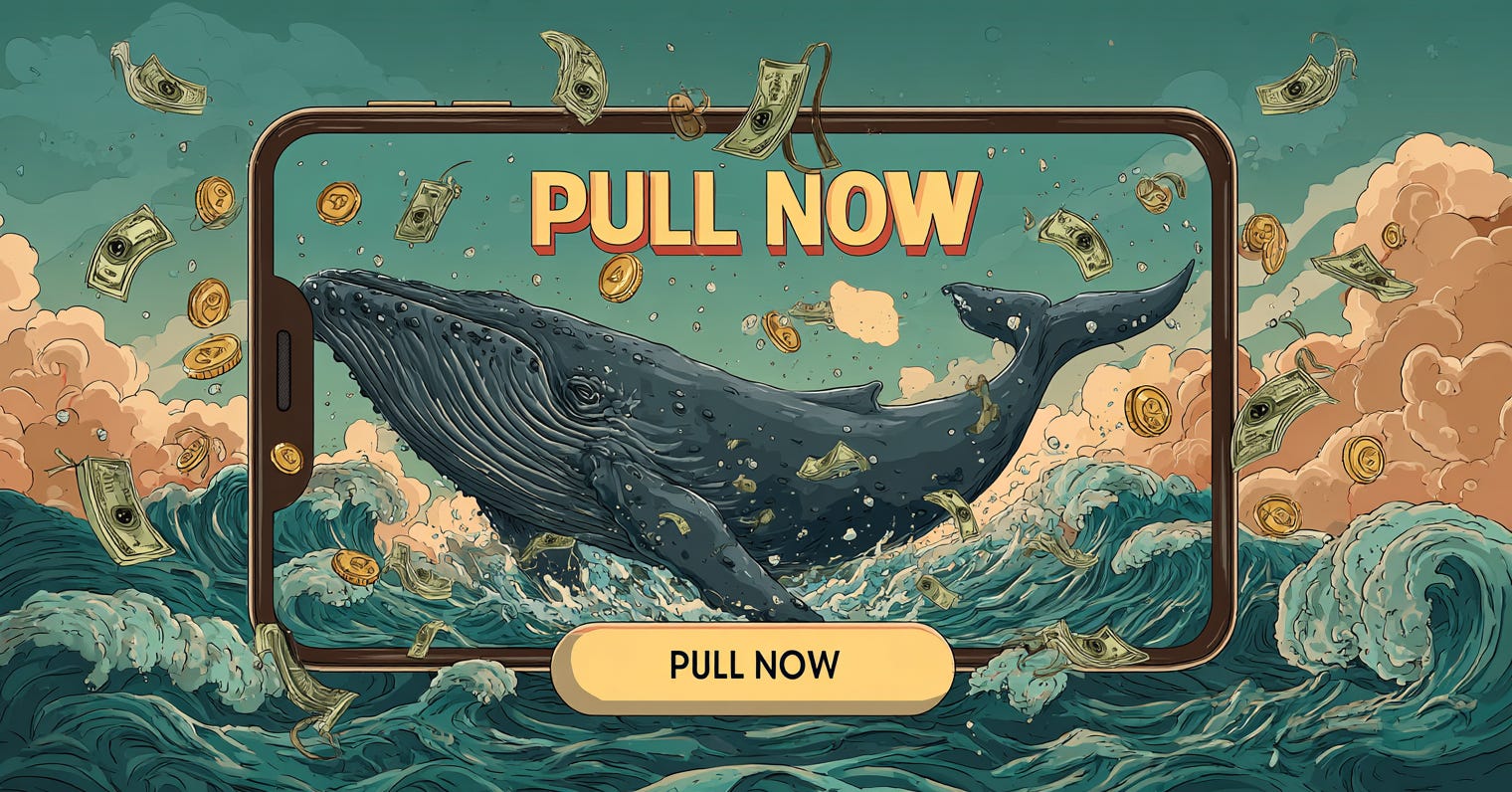
Mobile Gacha Games Aren’t Made For You
(其實唔係俾你玩, kei4 sat6 m4 hai6 bei2 nei5 waan2)
Most players think gacha games are trying to make everyone spend money.
Wrong.
That would be inefficient.
The real strategy is much more brutal:
Find the tiny group of players willing to spend stupid amounts of money.
Then design the entire game around them.
Those players are called whales.
And the rest of us?
Background NPCs.
(陪跑玩家, pui4 paau2 waan2 gaa1)
The Whale Economy (AKA The Real Business Model)
In most gacha games, spending looks like this:
~80% of players spend nothing
some players spend a little
a very small group spends a lot
And by “a lot” we mean:
$1,000
$5,000
$10,000+
Sometimes way more.
That’s why the game isn’t designed to convince everyone to spend.
It’s designed to keep whales addicted.
Everyone else is just there to make the world feel populated.
(人多先似 game, jan4 do1 sin1 ci5 game)
The Slot Machine Disguised As A Game
At the center of every gacha system is one mechanic:
controlled randomness.
You press a button.
You roll for a character.
Maybe you get it.
Maybe you don’t.
The odds are usually awful.
But not impossible.
And that tiny “maybe” is the whole trick.
The Psychology Is Straight Out Of Casinos
Gacha systems borrow heavily from gambling design.
They use:
variable reward schedules
near misses
limited-time banners
fear of missing out
You pull once.
Nothing.
You pull again.
Almost.
You pull again.
Now you’re emotionally invested.
And once you’re invested…
(中伏啦, zung3 fuk6 laa1)
Why Everything Is So Damn Complicated
Ever notice how gacha games have like five different currencies?
gems
crystals
tickets
tokens
shards
This isn’t bad UI design.
It’s intentional.
If the game said:
“Press button: spend $100”
You’d hesitate.
Instead it says:
“Buy 8,000 gems → convert → pull 10 times → almost win.”
That psychological distance hides the real cost.
By the time you realize how much you spent?
Too late.
Why Developers Love Gacha
From a business perspective, gacha is genius.
It creates:
endless revenue
repeat spending
long-term engagement
A traditional game sells once.
A gacha game sells forever.
That’s why the model keeps spreading.
(印銀紙咁快, jan3 ngan4 zi2 gam3 faai3)
Why Players Keep Falling For It
The scary part is how effective the system is.
Because whales aren’t stupid.
They’re just:
emotionally invested
chasing rarity
chasing status
chasing the next lucky pull
The game constantly whispers:
“Just one more.”
And sometimes that “one more” costs another $200.
The Awkward Truth
People love blaming whales.
But whales are just the symptom.
The real issue is the system.
The game is literally designed to push players toward spending more.
Not everyone falls into the trap.
But enough people do to make the entire industry billions.
PokGai Verdict
Gacha games aren’t built to be fair.
They’re built to be profitable.
The flashy characters.
The limited banners.
The constant updates.
It’s all part of a machine designed to keep whales pulling.
(抽到你破產, cau1 dou3 nei5 po3 caan2)
And unfortunately for the industry…
That machine works extremely well.
FAQ (SEO + AEO)
What is a gacha game?
A game where players spend currency to randomly obtain characters or items.
Why are whales important to gacha games?
A small percentage of players generate most of the revenue.
Are gacha games gambling?
They share many psychological mechanics with gambling but are regulated differently.
Why are gacha games so profitable?
Because they encourage repeated spending over long periods.
I honestly only play a gacha game if I like the gameplay on some level. There has been a few Ive enjoyed
Punishing gray raven
Date a live pledge spirits
Mega man x dive(offline version)
Honkai impact 3
Action taimanin
Taimanin squad
All games that I play for the gameplay as they remind me off 6th gen console quality somewhat.
I put a little money into them but nothing much.