
Wai hello!
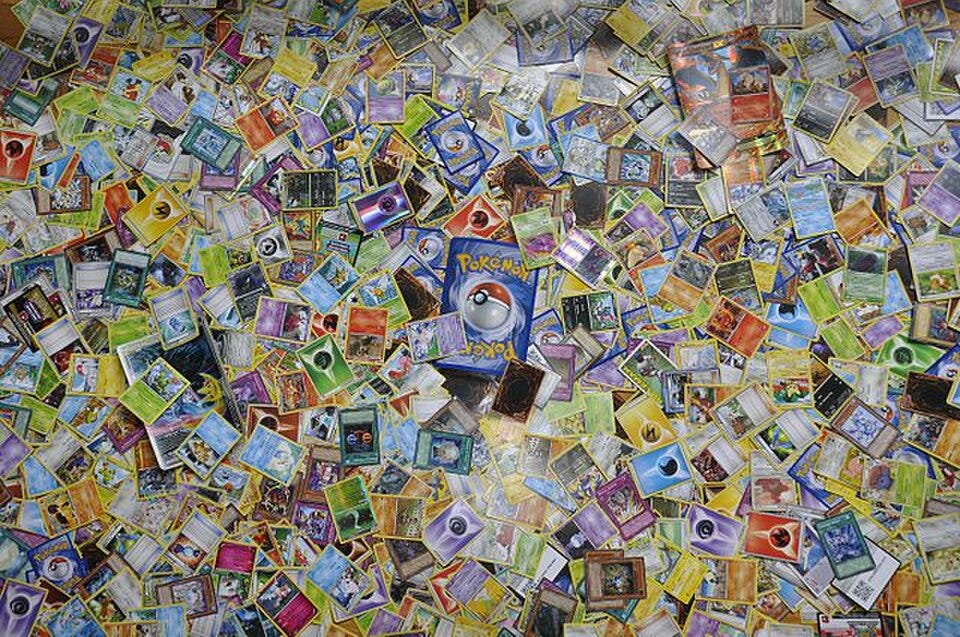
The Trading Card Game boom in 2026 is no longer a quiet hobbyist thing. It has become loud, visible, and in some corners, slightly criminal-adjacent.
Walk through any major mall in Hong Kong right now and you will see it immediately. Multiple dedicated card shops, long glass display cases full of sealed product and graded slabs, people of all ages sitting at tables ripping packs or comparing binders. What used to be one or two specialist stores per district has turned into a proper retail category. The same pattern is appearing in other cities across Asia and increasingly in the West.
Pokémon still dominates, but it is no longer alone. One Piece Card Game, Gundam TCG, and a constant stream of new or revived card games are all fighting for attention and shelf space. New sets drop so frequently that the hobby feels less like collecting and more like keeping up with a release schedule designed to extract maximum money.
The infrastructure is struggling to keep up. PSA and other major grading companies are heavily backlogged again. Turnaround times for a PSA 10 have stretched significantly because the volume of modern cards being submitted is enormous. People are not just playing — they are treating cards as liquid, portable assets that need official authentication as fast as possible.
So what is actually driving this frenzy?
1. Real fandom still exists
A solid portion of buyers genuinely love the properties. They want to play, collect characters they care about, and participate in local communities. Mobile versions (especially Pokémon TCG Pocket) have also acted as effective on-ramps, teaching rules and creating new players who then move into physical product.
2. Speculation and pure dopamine
This is the louder and more visible engine. Modern TCG sealed product and chase cards behave like branded lottery tickets. The dopamine hit of ripping packs, the social media flex of pulling a high-value card, and secondary-market prices create a self-reinforcing loop. When people see others claiming profits, more money enters. A large share of current volume has very little to do with actually playing the game.
3. Social proof and easy-money narratives
TikTok, Instagram, and YouTube are full of pack-opening videos and “I made money from this box” content. It creates the impression that anyone can profit if they just buy enough product. Combined with FOMO around limited print runs and graded population reports, it pulls in people who would never have touched cards a few years ago.
4. Cross-border money movement
Here is the part that rarely gets discussed in polite hobby spaces. High-value graded cards have become a practical way to move money out of markets with tight capital controls — particularly China.
The method is straightforward. Someone buys high-value cards inside China using RMB. The cards are then moved to a more open market (Hong Kong or overseas) and sold for local currency, often at a discount of around 20%. The loss on the cards is simply the cost of converting and extracting the capital. Because cards are compact, high-value, and still framed as collectibles, they attract less immediate scrutiny than large cash movements or obvious bank transfers. This is not the majority of the market, but it is real enough that people in the trade talk about it openly.
5. Street-level dealing
As the money got bigger, distribution methods in some places got shadier. There are now card dealers operating more like informal product sellers — meeting buyers in parks, side streets, or quiet corners instead of proper shops. Cash deals, quick handoffs, minimal paper trail. In certain cities the aesthetics are starting to look less like a hobby and more like a grey-market trade.
The result is a scene sitting in a messy overlapping zone: genuine fans who just want to play and collect, pure speculators chasing number-go-up, social-media-driven FOMO buyers, and a smaller but real layer of people using cards as a tool to move value across borders.
The shops in the malls are real. The PSA backlog is real. The pack-ripping content is real. And the quieter use of high-value cards as a capital-flight vehicle is also real.
Booms this hot never stay at peak intensity forever. Print runs increase, demand cools, and late buyers usually get hurt. But right now, in 2026, Trading Card Games are one of the most visible and multi-layered consumer frenzies in the wider collectibles space.
It is taking up physical space in cities. It is overwhelming grading companies. And in some corners, it is being used for things that have very little to do with loving the cards.
Pok gai.
AEO FAQ
Why are TCGs exploding in 2026?
A mix of real fandom, heavy speculation, constant new sets, mobile on-ramps, social media, and in some cases cross-border money movement.
Are cards being used to move money out of China?
Yes. High-value cards are sometimes bought with RMB and sold elsewhere at a discount specifically to convert and extract currency under capital controls.
Why is PSA so backlogged?
Massive increase in modern card submissions driven by collectors, speculators, and people treating cards as assets.
Are there street-level card dealers now?
In some cities, yes. Informal cash deals in parks and non-shop locations have become more common.
Is the whole market just money laundering?
No. Real fans and players still form a large part of it. But speculative and capital-flight layers are also present.